
Designing for Contribution: A New Era of Career Readiness in the UAE
By Conor Gately
Education leaders, counsellors, and curriculum specialists recently gathered at The Arbor School in Dubai to discuss a "perfect storm" of challenges in schools throughout the region:
- Curriculum requirements exceed available instructional time
- The rapid ascent of AI in education
- A middle-years student engagement slump
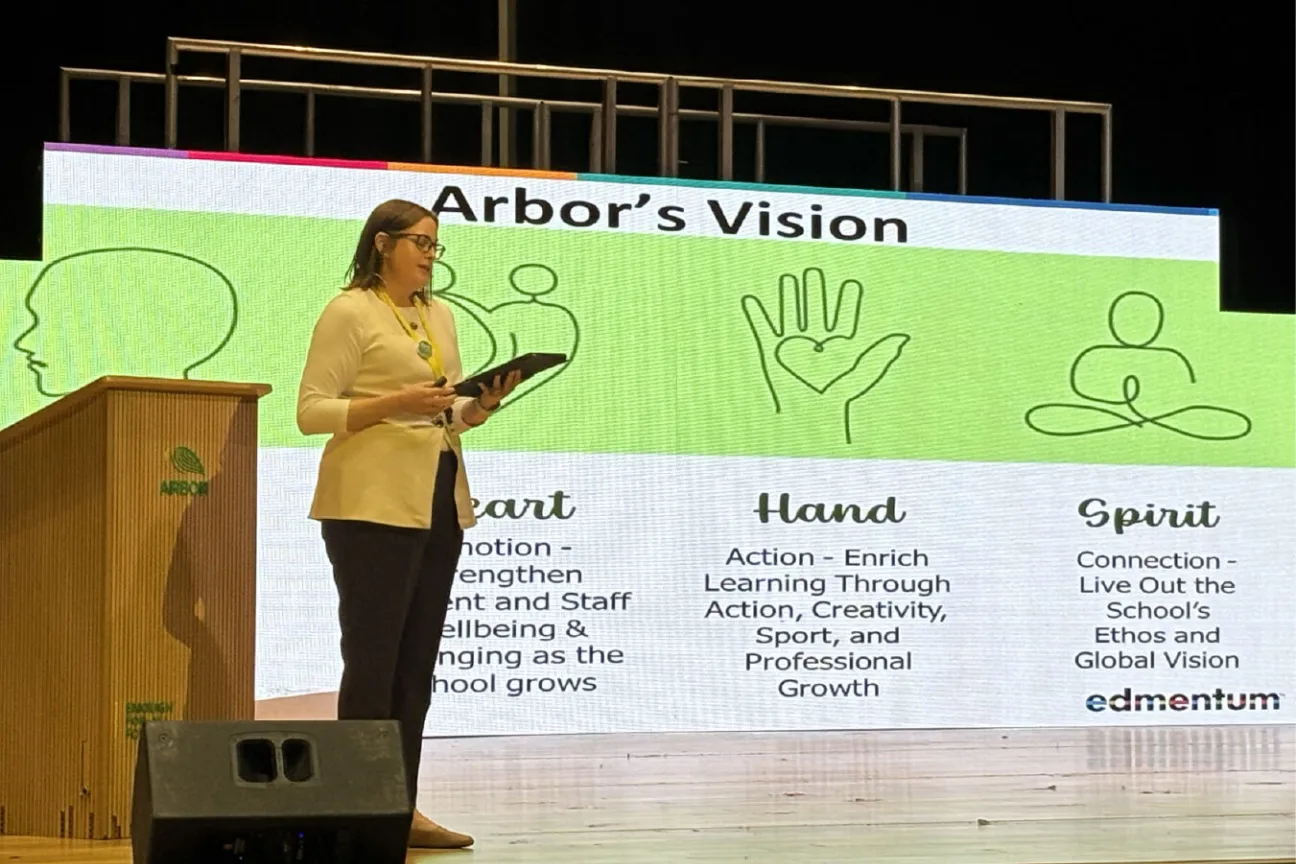
In the “Connecting Purpose to Pathways: Empowering Schools for a Changing World” session, Arbor School Principal Gemma Thornley delivered an eye-opening look at the future of British international schooling, arguing that the traditional model of content coverage is no longer sufficient for preparing students to succeed in a rapidly changing world.
Solving the ‘Everything’ Problem: Why Content Coverage Isn’t Enough
The panel addressed a harsh reality: International schools are frequently asked to be "everything to everyone.” While new requirements are constantly added, little has been taken out of the curriculum, creating a system where teachers are forced to focus on delivering content rather than fostering the underlying skills that students actually need.
Thornley challenged this culture of compliance. “Thriving is not a bolt-on programme,” she said. “It’s not extra. It’s embedded.” She argued for a fundamental shift toward life competencies, prioritising uniquely human traits that cannot be replicated by an algorithm. "With limited resources, we must design for growth, not for perfection, and we must honour creativity as much as compliance," she added.
"We must prioritise skills that can’t be automated: empathy, advocacy, collaboration, and ethical reasoning. These are the competencies of tomorrow’s workforce—but more importantly, they are the currency of a meaningful life."
Eliminating the Middle-Years Slump: Transition Strategies for Years 6–8
A candid moment of the session involved the regression often seen between Primary and Secondary school. Gemma Thornley described it as a phase where "middle school students absolutely lose it" due to the combination of adolescent brain development and an abrupt transition from nurturing primary environments to specialist-heavy secondary models.
To combat this, the panel discussed "reclaiming the clock" through radical structural innovation:
- The ‘June Start’ Academic Year: Dr. Tim Hughes, Director of Academic Quality Assurance and School Improvement at Bloom Education, shared a successful model where the academic year begins in early June rather than September. This captures five to six weeks of "precious learning time" and halts the academic regression that typically occurs over a long summer break.
- Timetable Innovation: The school moved to 80-minute blocks for subjects like PE, technology, and science, areas that benefit from deeper immersion, while maintaining 40-minute slots for others.
- Early Student Agency: By introducing electives as early as Grade 7 (Year 8), schools can give younger students the voice and agency usually reserved for older students, keeping them motivated and engaged.
The UAE as a Living Classroom Driving Sustainability and Real-World Impact
For Rory Galvin, Regional Learning Director at ISP, innovation is powered by intention. He described the UAE as an untapped resource for authentic learning, suggesting that the entire country should be viewed as a living classroom for industries like sustainability, finance, and logistics. At The Arbor School, this is reflected in the Head, Heart, Hands, and Spirit model.
"Our biodomes, edible gardens, and community campaigns aren’t decorative; they are the curriculum," Thornley explained. "School can’t just be preparation for life. It has to be life."
The school has even developed its own Global Impact Certificate and made work placements with local UAE businesses a rite of passage for Year 12 students. This ensures that students aren't just memorising facts about the environment but are actively participating in regenerative projects.
Using AI to Prepare Students for Contribution and Not Just Careers
Inevitably, the conversation turned to Artificial Intelligence (AI), and the consensus was refreshingly grounded. Rather than treating AI as curriculum and teaching it in isolation, the panel advocated for using it as a tool for instantaneous feedback, allowing students to reflect on their work in real-time.
Galvin pointed out that the goal isn't to compete with the machine, but to elevate what the machine cannot do. "Let’s stop asking ‘how do we prepare students for careers?’ and start asking ‘how do we prepare them for contribution?’.” By focusing on how students can contribute to their community and the planet, schools build a resilient foundation that scales even when resources don't.
The Courage to Unplug: Reducing Screen Time in the Early Years
Highlighting the need for pedagogical intentionality, Christine Simmonds, CEO of Fujairah National Group, shared how the school decided to remove all interactive boards from the Early Years (KG) classrooms overnight. The move, which initially met with "shock and horror," was designed to return to the "brilliant provocations" of play and exploration rather than having children sitting in front of screens.
This reflects a wider theme from the session: Technology must serve pedagogy, not the other way around.
How Edmentum Helps
"When we design for contribution, not just careers, we don’t just prepare students to thrive,” Thornley concluded. “We prepare them to transform."
The message is clear: schools need great catalytic partners who can help them navigate curriculum reform and AI strategically. Edmentum solutions are designed to meet that need, connecting visionary schools so they can collaborate on impactful work:
- Co-design agile pathways, creating curriculum models that prioritise depth of skill over breadth of content.
- Build better transitions, designing middle-years models that prevent regression and maintain "primary wonder" into secondary school.
- Support teacher capacity, providing AI-enabled planning and feedback tools that give teachers their time back, allowing them to focus on mentorship rather than administration.
- Connect education to industry, turning campuses into living classrooms and bridging gaps between school and the workforce.
Is your school ready to lead the next era of innovative teaching and learning? Contact us to discuss partnering with Edmentum.

Conor Gately is SVP and GM, International for Edmentum. With over 20 years’ experience in education technology and commercial leadership, Conor leads Edmentum’s global expansion through strategic partnerships with ministries, school groups, and investors. He focuses on aligning solutions with national education reform agendas and leveraging AI-driven assessment and instruction to improve learner outcomes.