Industry-Recognized Credentials: From High School to High-Demand Careers
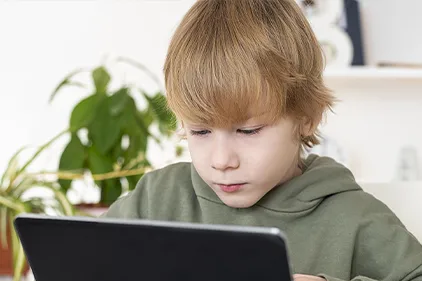
Although primary and secondary education are often grouped together as “K–12,” it's clear that second graders are vastly different from high school students. That said, how can we shift conversations regarding instructional strategies and policies to focus on the various ways online and hybrid learning can serve our youngest learners?
Characteristics of Elementary School Students in Online/Hybrid Learning
When many people hear the term "online learning," they envision a student in front of a computer, working independently or engaging with a teacher or classmate. They are also likely to picture a high school or college student.
Hundreds of thousands of K-5 students have successfully completed online elementary school courses and advanced to middle school. Their experience is not quite the same as is often imagined of high school students, for several reasons.
First, the online teacher leans heavily on a caregiver who works with the student in the student's home or another location. The caregiver, often referred to as a learning coach, helps the student stay on task, navigate the school's technology platform, and alternate between online and offline activities. The number of offline educational activities for the youngest students is also much higher than for older students. Young students may read paper books, fill out pencil-and-paper workbooks, and work with basic physical manipulatives and materials. There is relatively less use of digital content, which is more game-based and includes a lot of media and interactivity. It may even have cartoon characters directing students through the content.
Elementary-age students are also, obviously, making choices that are heavily—if not entirely—guided by their caregivers. They may attend an online or hybrid school for reasons related to family preferences, health concerns, or bullying or other social issues.
Hybrid elementary schools are likely to have a schedule with set days of expected on-site attendance and expectations for off-site learning days. During the on-site days, a hybrid elementary school may resemble a traditional elementary school, with extensive small-group instruction and activities.
Full-time online schools tend to stress socialization activities for elementary students, including field trips, partnerships with local YMCAs, Boys and Girls Clubs, public libraries, holiday parties, etc.
Courseware Elementary, in partnership with StrongMind, delivers high-quality, standards-aligned digital curricula designed for virtual or blended learning with courses in math, ELA, science, social studies, art, health, and PE to support every young learner's journey.
Adapted from an article that initially appeared on StrongMind.