Why the U.S. Dual Diploma Is the New Global Standard for International Students
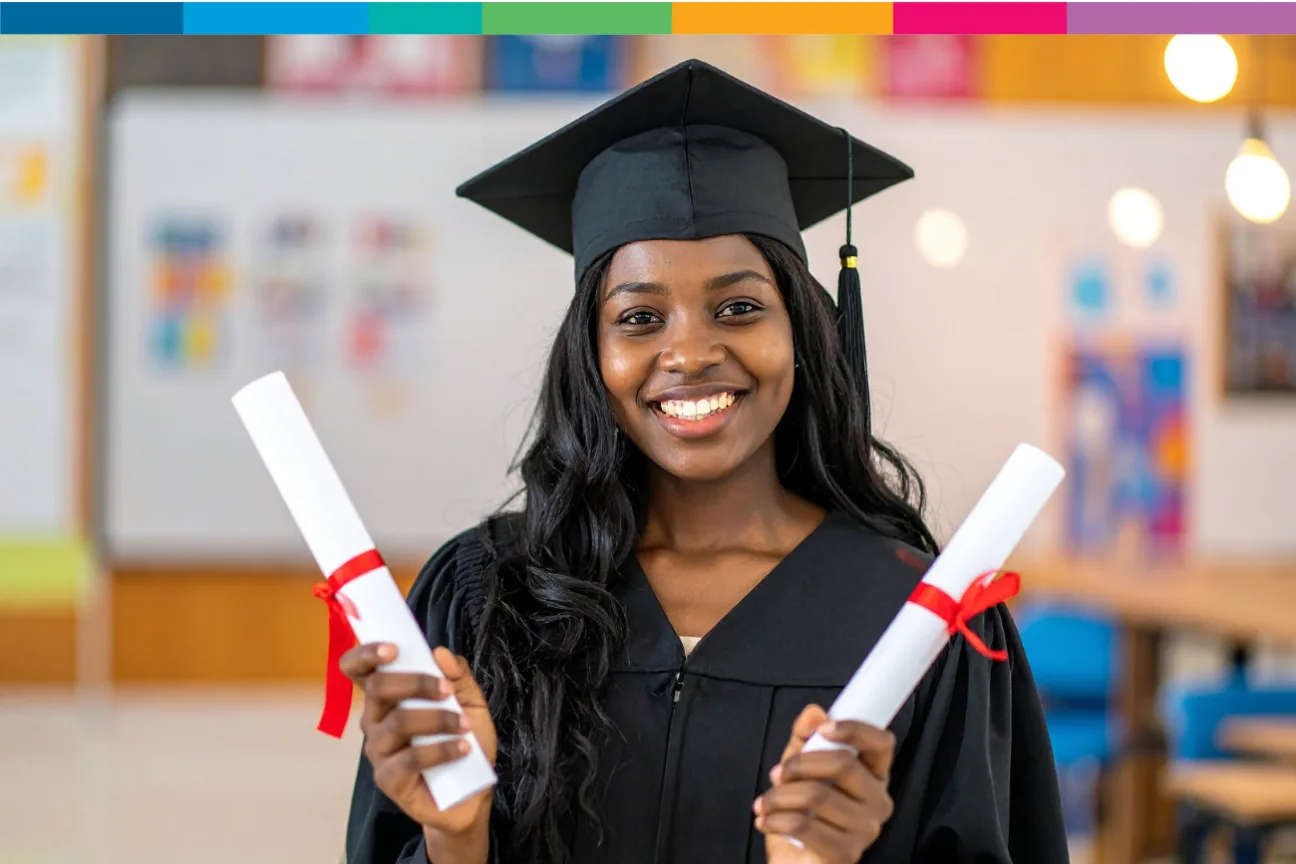
Key Takeaways for School Organisations:
- While English is often the initial draw, the dual diploma proves that a student can problem-solve, write, and debate complex subjects in English. It shifts the focus from simple vocabulary memorisation to robust academic immersion.
- By navigating two different educational systems simultaneously, students develop organisational skills, independence, and the ability to think laterally. This level of intellectual agility is a high-value signal to both universities and future employers.
- Career learning should leverage curiosity. A broad range of electives allows students to test-drive career paths before committing to a university major so they can explore their interests early on and find a focused direction through informed discovery.
- Educatius combines accredited online coursework through EdOptions Academy with academic guidance to support secondary students in more than 50 countries. This enables students to meet U.S. graduation requirements while studying in their home countries.

The U.S. dual diploma serves as a global academic bridge that enables international students to earn an American diploma in addition to their local secondary qualification. Kerry Rose, Programme Support Manager at Educatius Academy, explained how specialised electives, informed discovery, and a dual-system approach are helping students (including her own children) develop the lateral thinking and independence needed for success in the global workforce.
Kerry Rose has worked in education for more than 30 years. She’s taught in classrooms, led academic programmes, and applied her skills in a range of bilingual and international education systems. She knows how schools work and how students learn. She also knows how often secondary students are asked to make enormous decisions without clear direction.
Today, as Programme Support Manager at Educatius Academy, Kerry supports international students pursuing the U.S. dual diploma. When she first learned about the programme, she says she was ‘completely blown away.’ At the time, she was living in Spain and working with students throughout Europe and beyond. Two of her own children were starting to feel the pressure to choose a path and commit to a direction—and they were at very different starting points.
A Talented Aspiring Artist Without a Backup Plan
Kerry’s son Oscar had always been creative, artistic, and deeply interested in illustration, but talent alone wasn’t translating into clear direction. When he fell short in two subjects required for his Spanish secondary school qualification, he opted not to repeat an entire academic year, but to instead retake those courses online while figuring out how to move forward.
Illustration is a competitive field, and he needed something he didn’t have: a back-up plan. Kerry encouraged him to think beyond a single, narrow outcome, and they sat down and reviewed EdOptions Academy course options, exploring syllabi in areas like graphic design and technical drawing.
![“The [Edmentum coursework] really helped [my student] focus. He understood what he needed to complete, why he was doing it, and how it connected to his future goals.”](https://cdn.edmentum.com/assets/media/tfs/_1584xAUTO_fit_center-center_82_none_ns/739810/Educatius-student-focus.webp)
At that point, the conversation shifted. Oscar gained a clearer picture of how his skills and interests aligned with concrete academic pathways, and everything began to click. As Kerry explains, “The coursework really helped him focus. He understood what he needed to complete, why he was doing it, and how it connected to his future goals.”
A Child with Endless Curiosity but Limited Clarity
Oscar’s younger sister Emily had no idea what she wanted to do. When asked about the future, her answers ranged widely, from astronaut to doctor to international lawyer. For her, Kerry saw the dual diploma as an opportunity for structured exploration and informed discovery.
Together they worked through a long list of potential interests. It took weeks to narrow the options from dozens down to a manageable set. Emily began exploring courses that matched her curiosity, starting with German and continuing through archaeology, criminology and forensics.
Some course descriptions confirmed her interests. Others ruled them out. For instance, Emily was interested in archaeology, but after reading what would be required to pursue a career in it, she decided against it. As she continued to explore, she found that criminology and forensics resonated far more strongly, and she started to visualise what that path could look like after secondary school.
Today, she’s finishing her secondary education with clear academic direction and realistic options for the future, including the possibility of studying abroad.
Kerry takes a similar approach with students she works with at Educatius. “I tell them, ‘Leave room to explore electives. Do you like digital photography? Do that then. Do you like cooking, culinary arts?’ We try to make sure that they don't just go down one path and encourage them to choose something else a bit different.”
Why the U.S. Dual Diploma Is in Global Demand
For many international families, the initial draw is simple: English. Kerry frequently sees this as a key motivator, but their understanding quickly deepens once they see everything that actually represents.
An American secondary school diploma signals far more than language fluency. It shows that a student can learn, write, discuss, and problem-solve entirely in English across academic subjects and not just in a language classroom.
Students do much more than memorise vocabulary and complete grammar exercises. The dual diploma helps them:
- Develop academic fluency by studying science, history, maths, and electives all in English.
- Follow an American academic framework and produce marked work that appears on an official transcript.
- Continue developing academic English all the way through secondary school, even if their schools don’t prioritise bilingual education.
English Proficiency Alone is not the Ultimate Goal
The American education model introduces students to a fundamentally different way of learning. Course content emphasises investigation, discussion, and applied thinking rather than memorisation. Students are encouraged to analyse information, form opinions and support ideas with evidence. For many international students, this approach is entirely new.
Working within two academic systems simultaneously forces students to think with more agility. They learn to shift between structures and learning styles, and that flexibility can significantly strengthen problem-solving skills and independence long before students reach university. It is one reason Kerry believes the programme delivers value even for students who never plan to study in the United States.
Kerry put it this way: “It's not just the confidence; it's the lateral thinking. They are demonstrating to employers that they can handle two different languages in two different systems, because the American system and what we usually do in Europe are completely different.”
!["[Our graduates] are demonstrating to employers that they can handle two different languages in two different systems, because the American system and what we usually do in Europe are completely different.”](https://cdn.edmentum.com/assets/media/tfs/_1584xAUTO_fit_center-center_82_none_ns/739811/Educatius-graduates.webp)
The Breadth of EdOptions Academy Courses Made All the Difference
As a former educator, Kerry naturally pays attention to how students and teachers interact. She describes the teachers as “very pro-students,” noting that they consistently make time for learners, check in regularly, and provide guidance whenever challenges arise. Educatius reinforces that structure through weekly coaching and progress reviews, helping students stay organised and on track with their goals, whatever they may be.
The result is a learning environment that seamlessly combines flexibility with accountability—and that success is easy to see. Students who are not confined to narrow tracks or early commitments have the freedom to explore career-aligned pathways while still reserving space for discovery.
EdOptions Academy Is Built for International Students
This balance between flexibility and accountability is beneficial in many ways—it gives students autonomy without making them invisible.
- Courses are fully online, allowing students to complete U.S. course content alongside their local schooling. Many study from home, while some access the platform through school computer rooms or learning centres.
- Enrollment is fast, often allowing students to begin course content within 24 hours. Once enrolled, students are supported by certified teachers, live instructional sessions and clear pacing expectations.
- Additional coaching supports that structure. Weekly progress checks help identify students who may be falling behind due to organisation, workload, or confidence rather than ability.
A Dual Diploma Is More than a Diploma
Over time, Kerry has seen the outcomes as students learn how to express opinions, participate in discussions, and approach problems from multiple angles. Working across languages and academic systems further strengthens their independence and adaptability.
She also saw this growth firsthand when Emily, who is normally shy, volunteered as a student ambassador at a school presentation. Watching her confidently log in, navigate the platform, and explain the course content to parents was the moment Kerry realised how much growth had actually taken place along the way.
Families are increasingly seeing the value of the dual diploma not just as a ticket to university admissions, but also as a way to help students develop initiative, communication skills, and the ability to navigate complexity—things that universities and employers alike are prioritising more and more each year.
Students who complete two very different diplomas show they can manage multiple systems independently and succeed in a second-language environment. They demonstrate persistence, adaptability and academic maturity, and the dual diploma offers tangible proof that these durable skills have been developed.
Turning Curiosity Into Clarity
Educatius continues to support students in a wide range of countries, using EdOptions Academy as the foundation of its dual diploma programme. Kerry says that very few students who begin the programme fail to succeed. Drop-out rates remain extremely low, but numbers are not what stay with her most.
What stands out are the moments when students discover what they don’t want to pursue before committing years of study and tuition. The moments when curiosity becomes clarity. When uncertainty becomes confidence. Because sometimes the greatest value of education is simply helping students understand themselves sooner.