
Electrical Careers Are in Demand. Make Sure Training Isn’t Out of Reach.
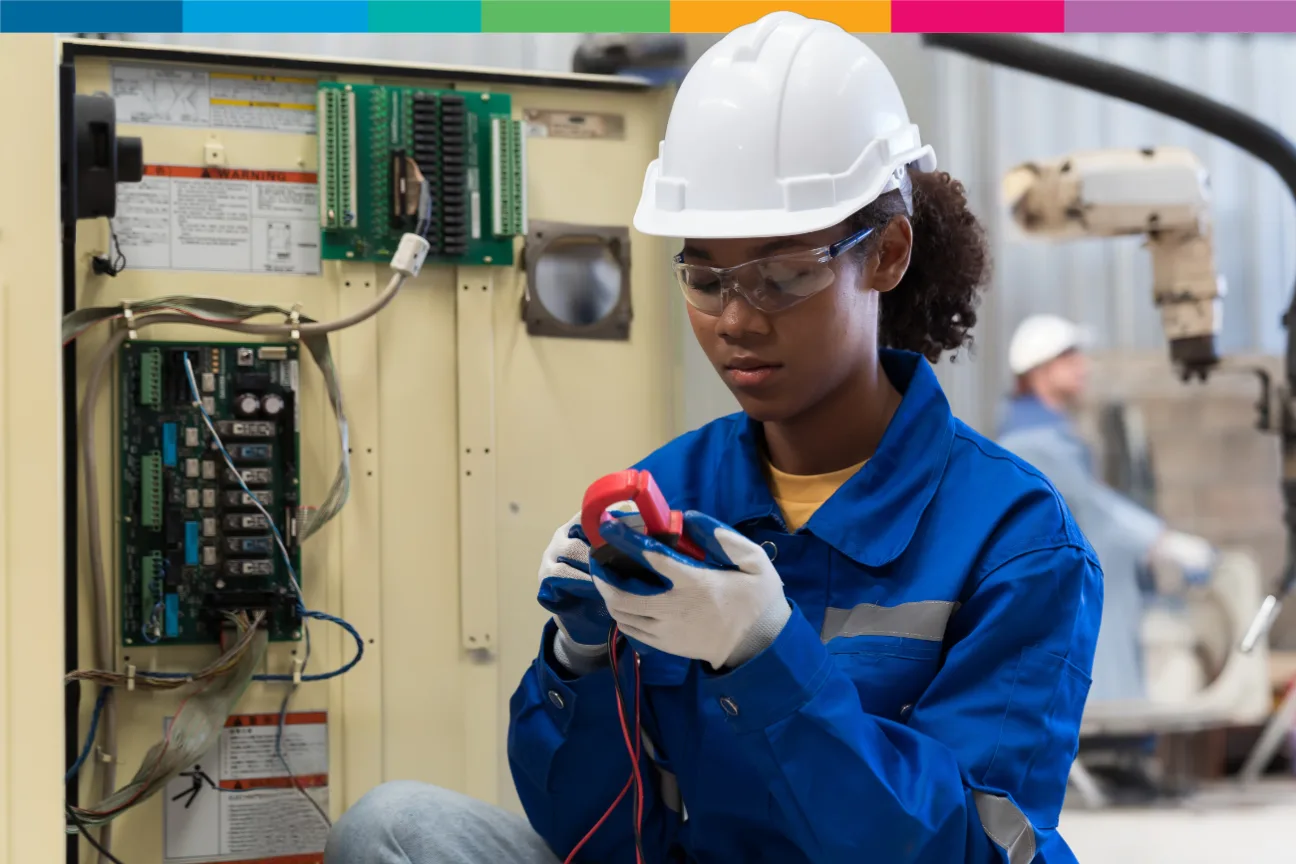
Electrical work offers high school students a strong job outlook and good earning potential in a skilled trade that doesn’t require a four-year degree. That path can start right after graduation in an entry-level role such as electrician’s helper, with opportunities to build skills and advance further over time. Here are a few reasons electrical fields are worth considering:
- High demand: The U.S. Bureau of Labor Statistics (BLS) projects employment of electricians to grow 9% by 2034, much faster than the average for all occupations.
- Plenty of job openings: About 81,000 job openings for electricians are projected for each year, on average, over the decade.
- Solid earning potential: Electricians earned a median annual wage of $62,350 in 2024, with the highest-paid 10% making more than $106,030 a year, compared with $49,500 across all occupations nationally.
How High School Students Prepare for Electrical Jobs
Most electricians enter the field with a high school diploma or equivalent and learn through a registered apprenticeship, which combines paid, on-the-job experience with classroom instruction.
This earn-while-you-learn model can make electrical careers more financially accessible than pathways that require a bachelor's degree, while also providing progressive wage increases and an industry-recognized credential. Apprenticeship programs generally last three to five years, and licensing requirements vary by state and locality.
But for students who don’t have access to electrical training programs at school, these opportunities may be completely out of reach. On top of that, electrical programs can be challenging for schools to offer, requiring specialized instructors, dedicated space, equipment, and careful safety procedures. Those barriers can also force schools to limit enrollment in these programs, leaving many students out.
Virtual Electrical Training Expands Access in High Schools
Virtual training through Trade Prep Powered by Interplay gives students opportunities to learn about electrical careers through expert-led video and immersive 3D simulations. Students can start to build foundational skills while earning their high school diploma, giving them pre-apprenticeship preparation. In some states, these experiences may also qualify as virtual work-based learning.
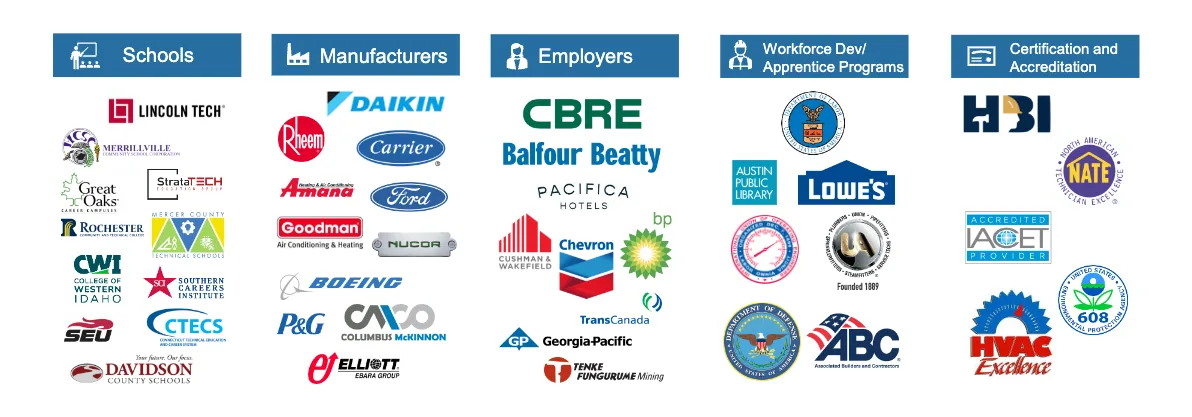
Trade Prep’s instruction is developed with skilled-trades professionals and grounded in the same industry expertise Interplay brings to employers, postsecondary programs, and workforce development organizations, including some of the biggest names in the skilled trades, as shown below. Here, that training is adapted specifically for high school students.
Trade Prep Powered by Interplay in the Training Ecosystem
Those foundational experiences can help students decide whether they want to continue to more advanced, hands-on training, or move on to another field. If they do want to keep going, the early exposure can lead them toward industry-recognized credentials that move them directly into a career after high school.
- Students can explore electrical work without a fully equipped electrical lab.
- Simulations let students work with realistic tools and scenarios without the safety risks that come with live electrical work.
- Students move from guided training to challenge mode and then assessment to build confidence before working more independently.
- Districts can provide training to more students than they could in a traditional shop class.
What Students Learn in Trade Prep's Electrical Program
Trade Prep's Electrical program provides 48 hours of training that prepare high school students for entry-level electrical work. Those who successfully complete the program earn an Interplay Job-Ready Certificate and can pursue roles such as electrician's helper, where they’ll continue building their skills alongside experienced professionals.
Trade Prep provides guidance that connects students to relevant third-party exam information, including the highly recognized OSHA 10-hour Construction Industry Exam, which can be completed as an additional purchase.
The program starts with the fundamentals. What electricians do. The math they use. The tools they rely on. Students learn to use multimeters and common hand and power tools before moving into electrical circuits, including building DC and combination circuits and troubleshooting basic circuit problems. Video instruction is paired with interactive simulations to help them apply what they've learned in realistic scenarios.
The curriculum highlights skills and procedures that electricians encounter on the job, including:
- Ampacity and wire sizing
- Electrical devices
- EMT conduit bending and installation
- Boxes and conduit
- Three- and four-way wiring
- Ladder and fall safety
- Lockout/tagout procedures
- Electrical safety
- The National Electrical Code
These experiences give students a valuable introduction to electrical work and help them build confidence before entering an apprenticeship, pursuing industry credentials, or continuing their training after high school.
Careers in Data Center Electrical Construction
Growth in cloud computing and artificial intelligence is driving rapid expansion in the facilities needed to store, process, and move data. Data centers depend on extensive electrical infrastructure to distribute power safely and reliably, creating another area where electrical construction skills are increasingly relevant.
Trade Prep's newest program, Data Centers Electrical Construction Helper, meets this emerging workforce need. The 73-hour program prepares students for entry-level data center electrical construction work using the same expert-led video and simulation-based training model. Students can earn an Interplay Job-Ready Certificate and build a foundation for pursuing additional credentials such as OSHA 10 or OSHA 30.
It's part of a growing Trade Prep catalog that now includes ten job-ready skilled-trades programs, with opportunities spanning electrical work, HVAC, solar, clean energy, facilities maintenance, and other in-demand fields.

Explore our full range of programs to learn more about preparing students for high-demand careers in the skilled trades.