Summer Reading Is Fundamental: Tips for Preparing Students During National Reading Month

Guest article by Karly O’Brien, Literacy Services Manager at Reading Is Fundamental (RIF)
National Reading Month is a celebration dedicated to fostering a love of reading. Schools, families, libraries, and community partners come together throughout the month of March for reading challenges, literacy events, story hours, and classroom activities that reinforce the importance of strong literacy skills. While the month is often filled with joyful book celebrations, it also offers something equally important: an opportune moment to prepare for summer.
Research consistently shows that without regular reading practice, students can lose 10–20% of their school-year reading gains over the summer months (Borman and Yang, 2025): a phenomenon commonly referred to as the “summer slide.” For readers who are reluctant, that loss can impact existing gaps.
With intentional planning, summer can become a season of growth, confidence-building, and sustained engagement with books.

The Current State of Literacy and Signs of Progress
Recent data from the National Assessment of Educational Progress (NAEP) emphasize both urgency and opportunity. National reading scores remain below pre-pandemic levels in many grade bands, and a significant percentage of elementary and middle school students continue to read below proficiency (U.S. Department of Education et al., 2025). The gaps can widen even more for students who are already struggling.
Districts implementing research-based literacy practices and programs, as well as intentional family engagement strategies, are reporting measurable gains. Research shows that family-implemented literacy interventions can produce statistically significant improvements in children’s reading skills (Melhuish et al., 2025). When schools align instruction with access to high-quality texts and consistent progress monitoring, they see encouraging trends in student reading outcomes (Kilpatrick et al., 2025).
These trends show that with the right strategies and supports in place, schools can make meaningful progress by setting the stage for next steps in strengthening literacy for all students.
Setting Students Up for Summer Reading Success
Planning for summer reading is most effective when it addresses both skill development and motivation. Students need access to books, but they also need engaging instructional materials to deepen their learning.
Build Excitement Around Reading
The more students are inspired, the more they read, and the more they grow.
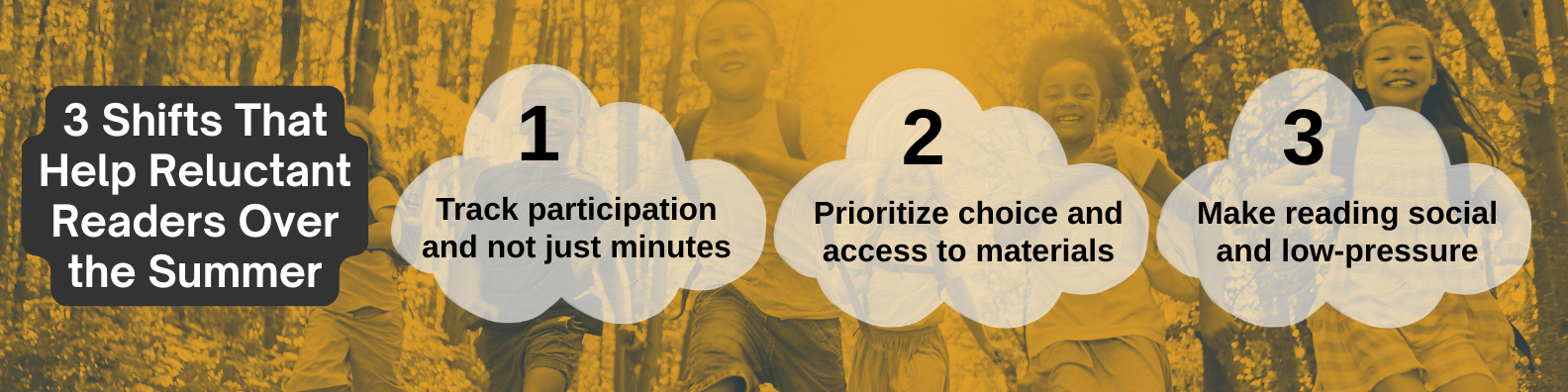
Schools can create thematic ideas, such as “Read Around the World,” graphic novel spotlights, or mystery month challenges. Instead of only tracking minutes read, focus on student participation and exploration through low-pressure reading challenges, book clubs, and reading with a buddy. All these activities make reading feel social and engaging, rather than assigned.
Collaborating with local libraries, community centers, and literacy programs expands access and reinforces shared responsibility. Hosting a “Summer Reading Kickoff” before the school year ends sends a powerful message: reading doesn’t stop when school does.
Related reading: Make Reading Your Brand: How Schools Can Become Influencers of Reading Engagement
Match Students with the Right Texts
Students are more likely to read consistently when they have books that are high-interest, relevant, and grade-level appropriate. Offering a range of formats, such as graphic novels, informational texts, or audiobooks helps meet diverse learning styles and habits.
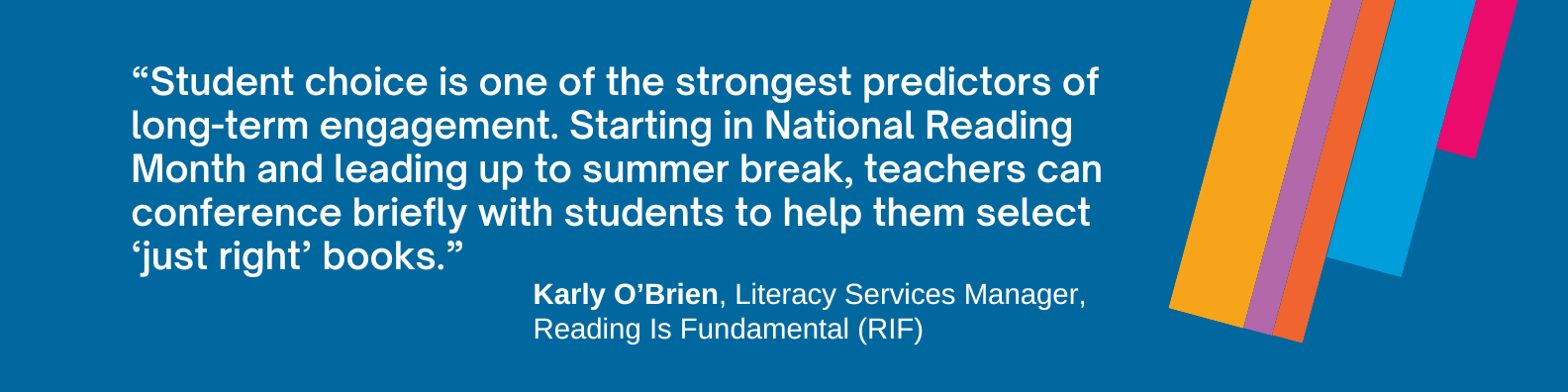
Student choice is one of the strongest predictors of long-term engagement. Starting in National Reading Month and leading up to summer break, teachers can conference briefly with students to help them select “just right” books. For students who need additional support, consider scaffolds such as guiding questions or shorter texts that build confidence and momentum.
Make Screen Time Count
Purposeful digital reading can help students access books even when home libraries are limited. Audiobooks, reading apps with progress tracking, and other curated digital libraries can extend practice and foster reading engagement over the summer. Schools can also support families by sharing a list of vetted digital resources and providing clear, realistic daily reading suggestions.
Reading Is Fundamental (RIF)’s digital library, Skybrary, offers 1,000+ eBooks (100 free) and 150+ educational video explorations (50 free) for kids. The kids reading app’s features are designed to support growing readers, including “read-to-me” narration, interactive comprehension prompts, and extensions beyond the typical read-aloud. These tools help strengthen vocabulary, comprehension, and independent reading skills.
When used intentionally, digital tools like these can expand access, provide flexible learning opportunities, and reduce barriers, helping students stay motivated and continue building literacy skills throughout the summer.
Engage Students in Meaningful Discussion
Encouraging reflection, through simple prompts such as “What surprised you?” or “Which character did you relate to the most?” strengthens comprehension and critical thinking. Schools might suggest family literacy nights, student reading journals, or book list recommendations.
These conversations can also connect to social and emotional development and cross-curricular themes. A story about resilience can spark discussions about perseverance; an informational text about climate can reinforce science learning.
Consider a virtual mid-summer check-in or a fall “Readers Celebration” event where students share their favorite discoveries from the books they are reading. Celebrations such as these can help students see themselves as readers.
Leading a Strong Literacy Initiative
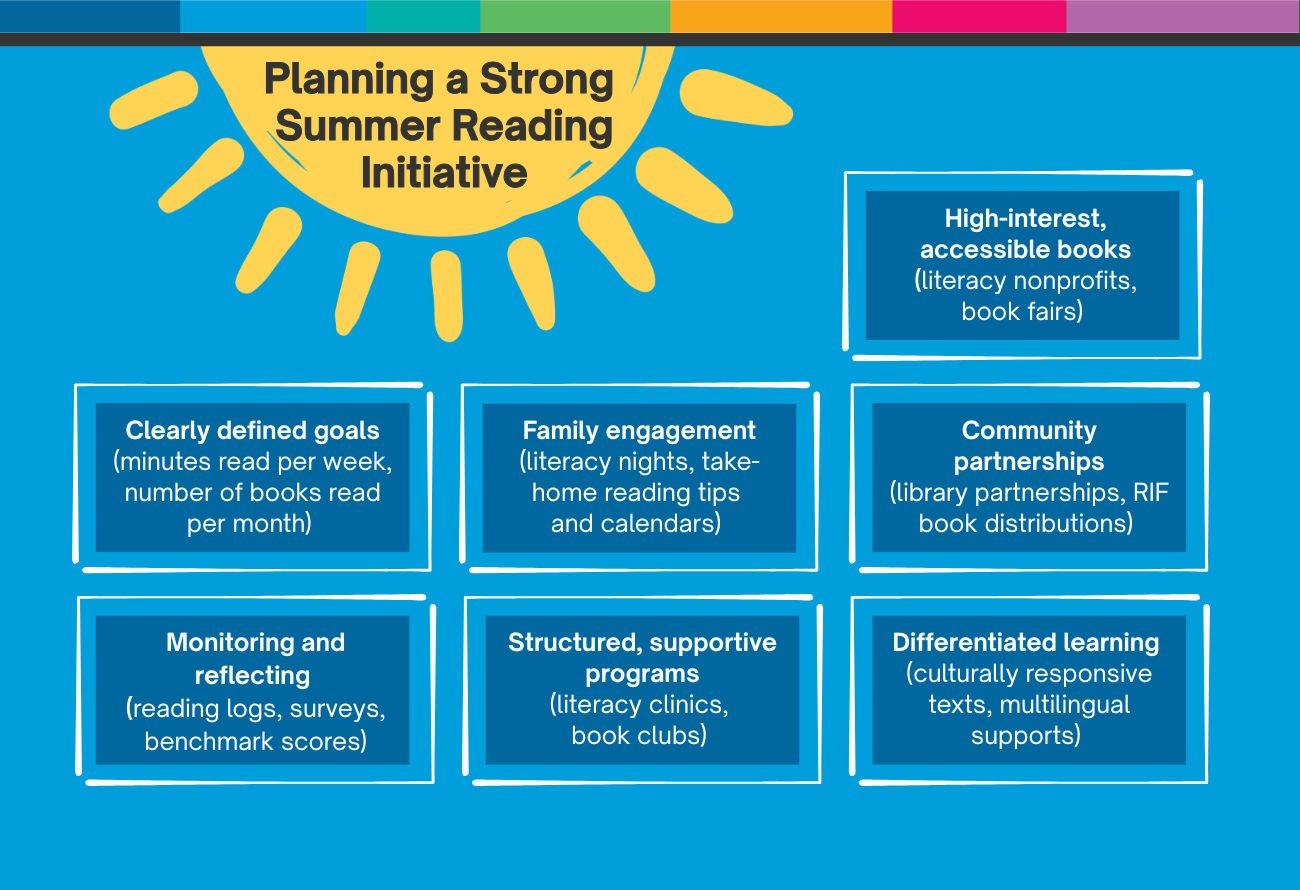
For school leaders, successful summer reading initiatives begin with clarity and alignment. A strong initiative includes:
- Clearly defined goals (minutes read per week, number of books read per month)
- Monitoring and reflecting (reading logs, surveys, benchmark scores)
- High-interest, accessible books (literacy nonprofits, book fairs)
- Engaging families (literacy nights, take-home reading tips and calendars)
- Structured, supportive programs (literacy clinics, book clubs)
- Leveraging community partnerships (library partnerships, RIF book distributions)
- Differentiated learning (culturally responsive texts, multilingual supports)
Leaders can build momentum by celebrating milestones, showcasing student participation, and sharing success stories. When teachers work together toward common goals, summer reading becomes an intentional strategy rather than a passive activity.
National Reading Month is a reminder of why literacy matters. By planning now, we can make sure students return to school in the fall as on-track, confident, resilient, and engaged readers. Thoughtful preparation can turn summer into a season of growth for all students, especially those who need it most.
Want to learn more from Reading Is Fundamental? Join us for a webinar on March 25. Erin Bailey, RIF’s Vice President of Literacy Programs and Research will be sharing new developments in the Science of Reading. Register here.

Works Cited:
Borman, G. D., & Yang, H. (2025). A Quasi-Experimental Study of the Achievement Impacts of a Replicable Summer Reading Program. Education Sciences, 15(11), 1422. https://doi.org/10.3390/educsci15111422
U.S. Department of Education, Institute of Education Sciences, National Center for Education Statistics. (2025, January 29). The Nation’s Report Card: 2024 reading and mathematics assessment results [Report]. National Assessment Governing Board. https://www.nagb.gov/news-and-events/news-releases/2025/nations-report-card-decline-in-reading-progress-in-math.html
Melhuish, E., et al. (2025). Family-implemented literacy interventions and child reading outcomes: A meta-analysis. Educational Psychology Review, 37, 1–24. https://link.springer.com/article/10.1007/s10648-025-09985-3
Kilpatrick, D. A., et al. (2025). Structured literacy approaches and student reading achievement. Journal of Literacy Research, 57(2), 145–172. https://link.springer.com/article/10.1007/s44217-025-00922-8
Karly O'Brien (she/her) is a certified reading specialist, former educator, and currently works at Reading Is Fundamental (RIF) as the Literacy Services Manager. She serves as an organization-based resource, demonstrating knowledge of evidence-based foundations of literacy and language and how they relate to RIF's mission. In this role, Karly designs, facilitates, and leads professional learning experiences for the RIF community and programmatic stakeholders. Additionally, she develops and manages the learning materials provided through RIF's e-book platform, Skybrary. During her undergraduate time, she engaged with educational research, specifically looking at the effectiveness of previously research-based practices within classroom contexts. The research is now published in the Journal of Teaching of Psychology. Karly holds a Bachelor of Science in Psychology from James Madison University and a Master of Arts in Curriculum and Instruction with a focus on literacy from The George Washington University.
Looking for more free resources to support literacy development? Visit our Science of Reading Toolkit.