
Science of Reading Toolkit
Decades of research explain how the brain learns to read. Here’s how to turn that research into everyday instruction in your schools.

Why Does Literacy Still Demand Your District's Attention?
Reading is the skill every other subject depends on. The numbers reveal the extent of the ground we still need to cover (Source: NCES):
69% of 4th graders cannot read proficiently
54% of US adults read below a 6th-grade level
Low literacy costs the US $2.2 trillion per year
This isn’t a one-year dip, and it isn’t evenly spread. A January 2025 American Enterprise Institute report found that U.S. student achievement began declining around 2013, well before the pandemic, with the declines concentrated among lower-performing students. The sustained losses are sharpest among lower-performing students. Core instruction alone can’t always meet every one of those students where they are.
Literacy education is strengthening in response. Educators are pairing explicit, research-driven instruction with technology-rich experiences, helping students build strong decoding skills, deepen comprehension, and navigate an increasingly complex digital world. The Science of Reading gives that work its foundation. So where does your district stand?
Before you change anything, get a clear picture of what’s already working and where the gaps are. Two Edmentum tools can help you take stock:
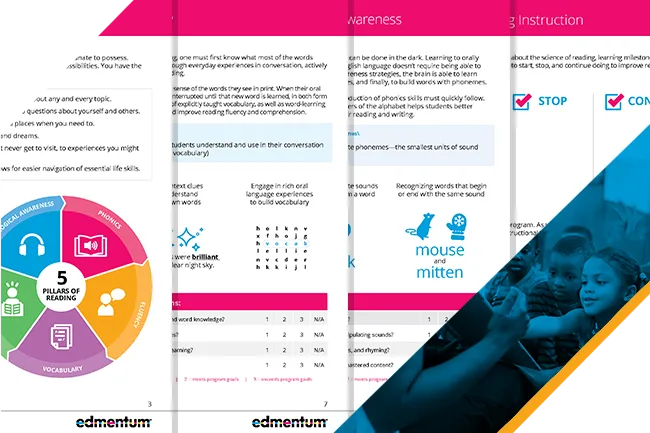
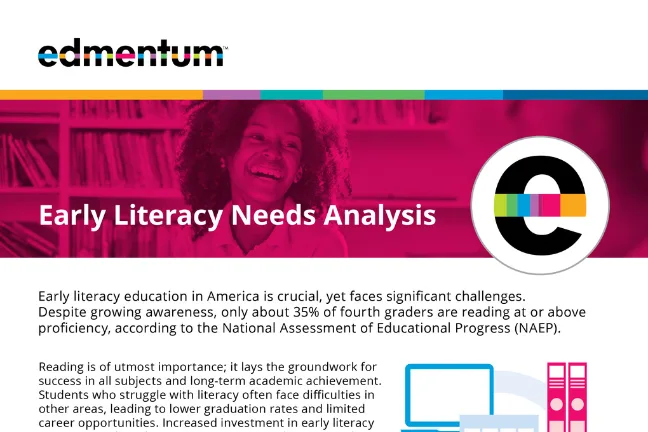
Tools to further the Science of Reading
What is the Science of Reading, Really?
The Science of Reading isn’t a program, a buzzword, or the latest trend. It’s a decades-deep body of research from cognitive psychology, neuroscience, and linguistics that explains how the brain actually learns to read. It replaces guesswork with instructional practices grounded in evidence. Three ideas set it apart:
It’s built on evidence, not fads.
Decades of cognitive psychology, neuroscience, and linguistics finally explain how reading develops. That gives your teachers research they can trust, not another trend to wait out.
It retires the “kids will pick it up” myth.
Reading isn’t natural. It must be taught explicitly and systematically. The research points to five pillars that make instruction clearer, stronger, and more equitable.
It gives you a map, not a menu.
Rather than a single program or philosophy, the Science of Reading is a deep body of gold-standard research on how decoding, language, and comprehension develop. Educators get a clear route instead of a long list of options.
Explore how Exact Path works with the Science of Reading's 5 Pillars in our series:
- Five Pillars of Reading: Key Elements for Literacy Success article
- Exact Path and the Science of Reading: Phonics video
- Exact Path and the Science of Reading: Comprehension video
- Exact Path and the Science of Reading: Vocabulary video
- Exact Path and the Science of Reading: Fluency video
- Exact Path and the Science of Reading: Phonological Awareness video
How Do You Get Started with the Science of Reading?
You can jump-start your journey by building a shared understanding of how the brain learns to read and why evidence-based instruction matters. The first three steps make the biggest difference:
Run a literacy audit.
Review instructional materials, observe classroom instruction, and analyze student data. Then, compare what you find against evidence-based Science of Reading principles to identify strengths and gaps. Include your assessments in the review: Do they tell teachers what to do next, and how much instructional time do they take?
Invest in professional learning that sticks.
Hands-on workshops, real-classroom coaching cycles, and collaborative practice sessions help educators use evidence-based strategies with confidence from day one.
Adopt materials built for the job.
Choose curricula and intervention resources that are explicitly systematic, backed by rigorous research, and designed to strengthen phonemic awareness, phonics, fluency, vocabulary, and comprehension. Look for tools that connect assessment data directly to instruction, so teachers aren’t left to bridge the gap on their own.



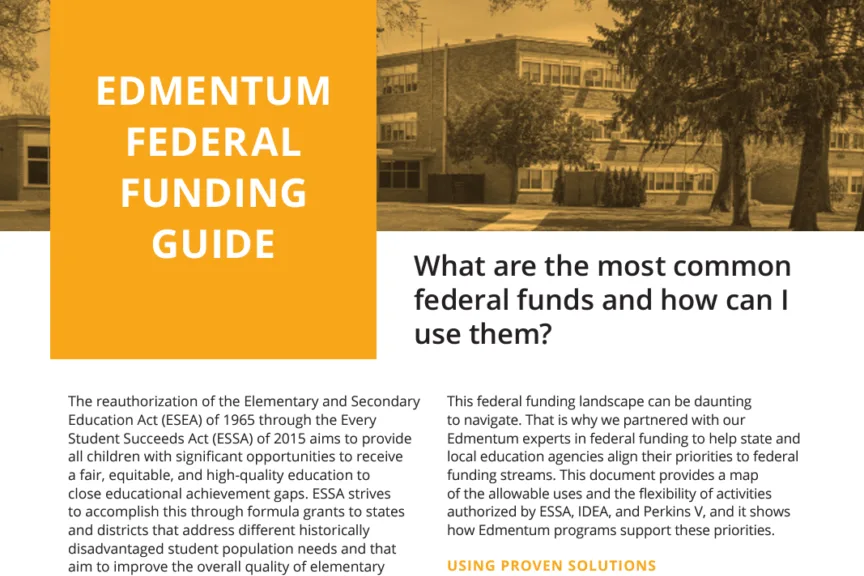
How Do You Fund Literacy When Budgets Are Tight?
Funding grew in 49 of 50 states between 2002 and 2020, according to NCES data on real per-pupil revenue. Pandemic stimulus dollars then brought an explosion of edtech tools, many with overlapping features. Now that the funding cliff has arrived, the question isn’t only where the money will come from. It’s how to make every dollar work together.
Districts are getting bold and inventive, mixing grants, community partnerships, and local campaigns with federal programs to bring in new books, better tools, and stronger support for students and teachers. Four moves help you build a plan that lasts:
Audit your current budgets and tools.
Identify areas where existing funds support reading initiatives, pinpoint gaps, and consolidate overlapping tools.
Tie literacy to your improvement plans.
Connect test-readiness efforts to school and district improvement goals to strengthen your funding justification.
Pursue competitive grants.
Look for funding focused on academic recovery, tutoring, or targeted intervention.
Braid multiple funding streams.
Work with district leaders to bring interventions, support programs, and federal and state resources together in one unified strategy.



We saw our students’ scores increase [with Exact Path], and it’s not only about the scores. Students’ confidence in the content, math and reading, also increased. It really makes all the difference when you have someone that’s listening to your needs.
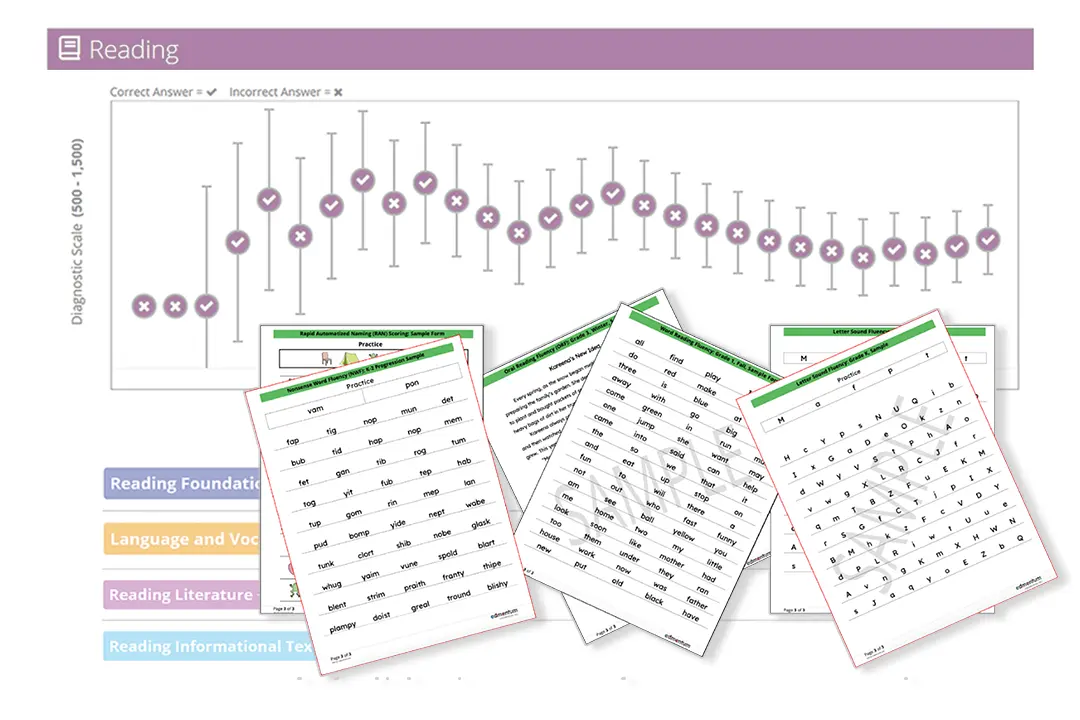
Know Where Every Reader Stands: Exact Path Insights
Exact Path’s adaptive reading diagnostic and universal screening identify students at risk for reading difficulties and characteristics of dyslexia, then track literacy growth over time.
- Results you can trust. NCII-recognized validity, reliability, and classification accuracy.
- Instructional time protected. Reduce assessment time by up to 40%.
- Precision on where students struggle. Domain-level detail and Lexile® measures pinpoint gaps so teachers can target instruction.
- Early warning on high-stakes outcomes. Predictive outcomes on assessments used in 36 states, plus the ACT® and SAT®, help teachers target support before testing begins.
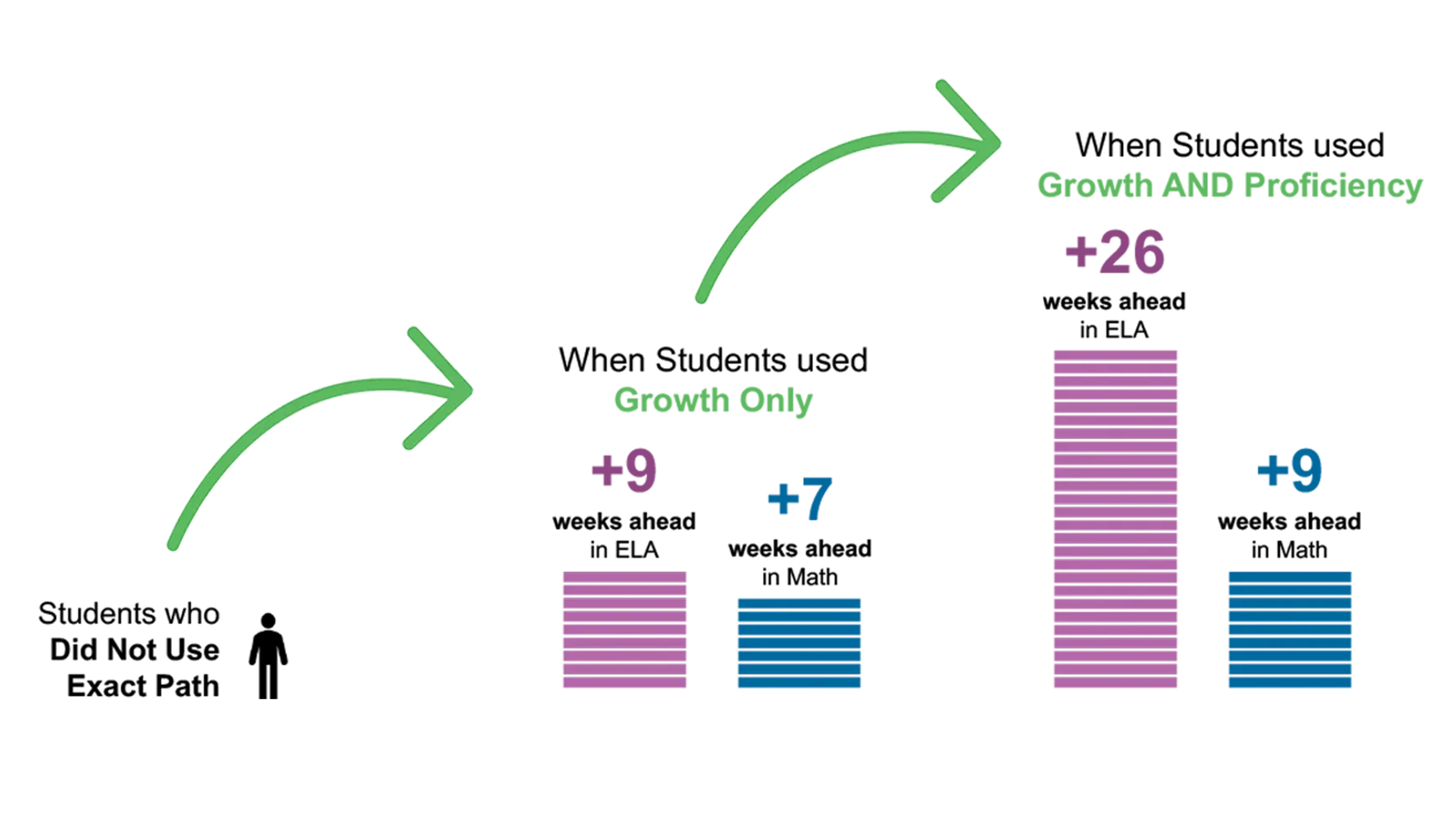
Turn Insight Into Action: Exact Path Proficiency
Standards-aligned formative assessments, practice, and instructional support come together in one connected workflow. Teachers can move directly from results to the right level of support, from targeted practice and quick review to reteaching with no tool-hopping and no manual lesson matching, so gaps get addressed before they compound.
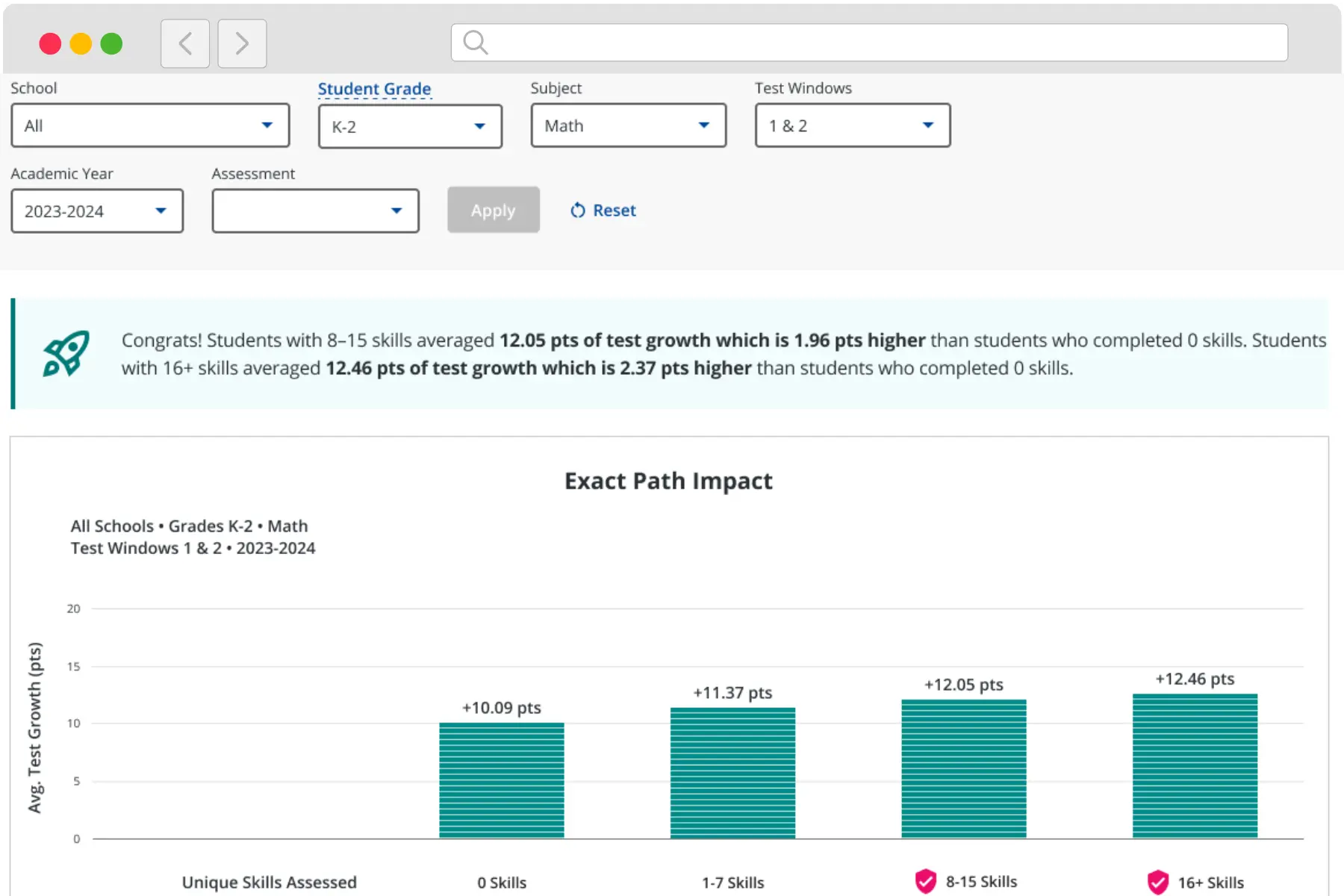
Accelerate Growth With Personalized Paths: Exact Path Growth
Diagnostic results automatically create ESSA Tier 2 proven learning paths. Each path places a student at the right level, adjusts as they progress, and delivers prerequisite skills when needed, with clear phonics instruction built around the five pillars.
- Real-time data and built-in impact reporting show growth without waiting for state results.
- Learning that’s 2–3X more effective than traditional interventions.
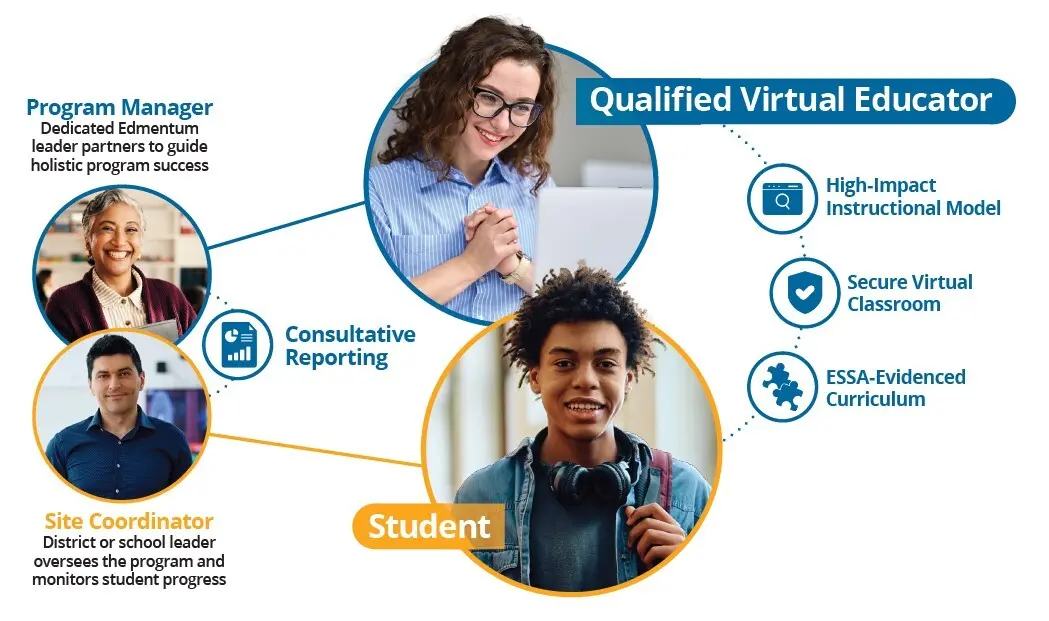
Add Intensive Support When Students Need More
Add Targeted Skills Instruction (high-impact tutoring) to the same system, so every layer works from one source of data.