Using High-Impact Tutoring for Test Prep Ahead of Spring Assessments

Schools and districts throughout the country are entering the final stretch before spring assessments, and leaders are asking themselves a familiar question: How can we address persistent learning gaps without disrupting core instruction? High-impact tutoring through targeted, small-group instruction has become an essential strategy for providing focused, timely support that leads to measurable growth.
These approaches prioritize intentional, individualized support, guided by diagnostic data or existing assessments, and are delivered in a structured way. When implemented with fidelity, high-impact tutoring can help schools respond quickly to student needs, enabling learners to close gaps and demonstrate readiness on end-of-year exams—without narrowing instruction to test prep alone.
Think Beyond Test Preparation
Effective tutoring is not about “teaching to the test.” Instead, it reinforces foundational and grade-level skills that support learning across classrooms, assessments, and content areas. Small-group instruction allows educators to target gaps, reinforce prerequisite knowledge, and build student confidence.
District leaders are also seeing broader benefits from virtual tutoring models:
- Consistent, human-centered tutors provide continuity for students, supplement onsite educators, and adapt to flexible scheduling during or after the school day.
- Classroom teachers retain visibility into student growth and instructional needs while students receive focused skill support.
When intervention is personalized and consistent, it accelerates academic growth, builds student engagement, and supports teachers during critical points in the year.

Turn Your Data Into Action
Most districts already use tools like NWEA MAP Growth or Renaissance Star to identify gaps and monitor progress throughout the year. The key differentiator is not the data itself, but how it is translated into instruction. Effective tutoring leverages assessment results to group students by specific skill gaps, prioritizes standards, and adjusts instruction in real time.
This shifts intervention from reactive to proactive and personalized. Students receive consistent, skills-aligned support rather than disconnected test preparation.
What Structured Tutoring Looks Like in Practice
In a recent webinar, leaders from Jersey City Public Schools shared how a structured tutoring approach with Edmentum’s Targeted Skills Instruction strengthened intervention and supported measurable growth.
The district saw strong end-of-year gains:
- Out of the students participating in Targeted Skills Instruction, 80% scored higher in ELA and 86% in math on their Renaissance Star Adaptive test.
- In grade 4, more than 90% showed significant score improvement compared to the previous year on state assessments.
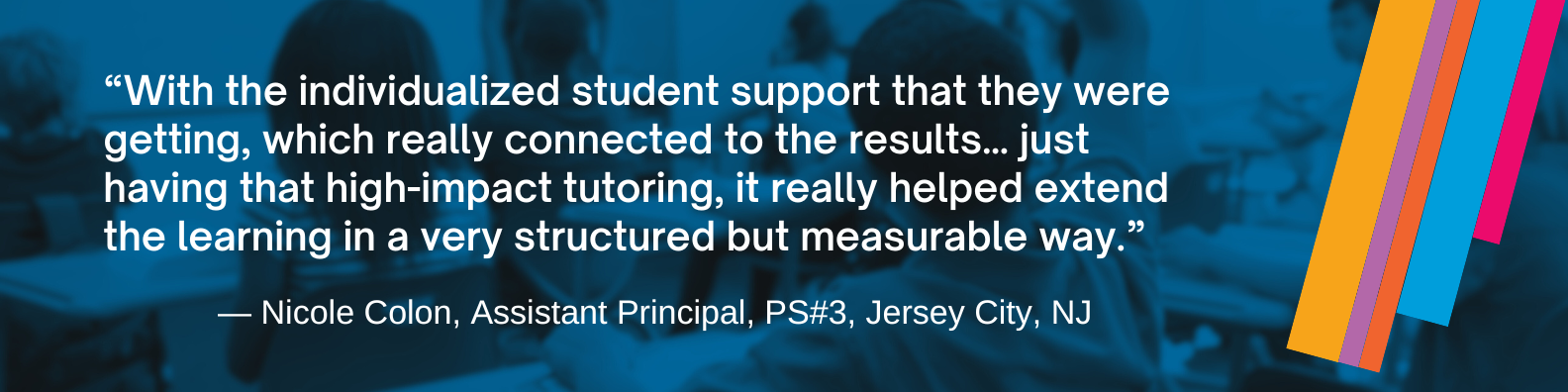
When tutoring is embedded within a clear instructional framework, it becomes a lever for accelerating measurable growth. View the full webinar here.

How Edmentum Helps Schools Fine-Tune Test Prep
- Targeted Skills Instruction offers a practical, evidence-aligned way to strengthen intervention ahead of year-end exams.
- Diagnostic assessments allow educators to accurately predict student performance on ELA and math in grades 3–8 and high school.
- The Tutoring and Intervention Toolkit outlines research-aligned strategies for designing and sustaining effective intervention programs.