Veteran Teachers Give Advice for Online CTE

Career and technical education (CTE) has always connected what students learn at school with what they’ll need to know in the workplace. However, with much of this learning now taking place online, schools are seeking ways to transition instruction while making sure that all students in CTE courses are prepared for life after graduation.
It’s not a matter of simply moving lessons to the virtual environment; it’s also about helping students develop the mindsets, habits, adaptability, and self-awareness they’ll need to truly thrive in adulthood.
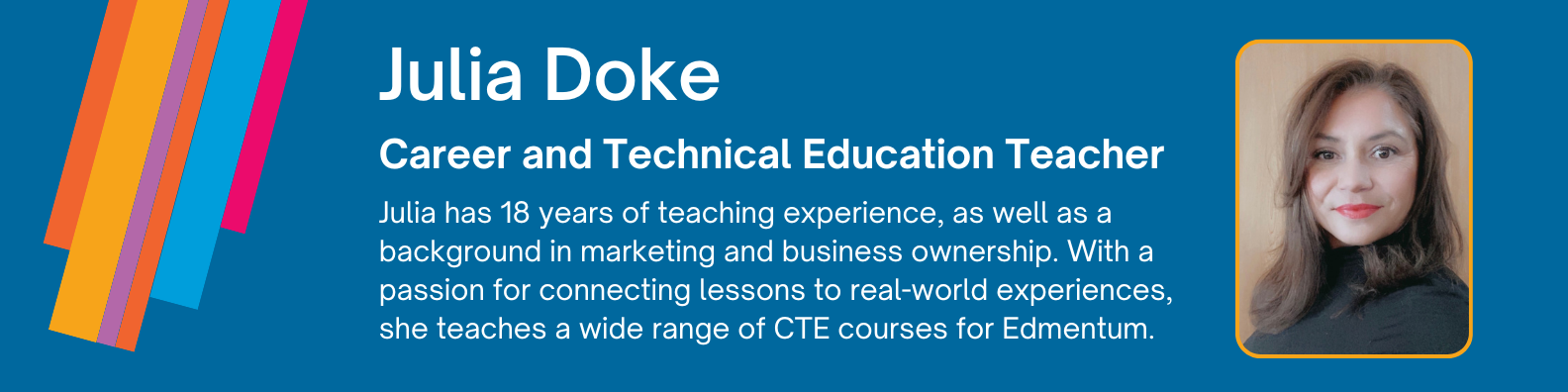
Julia Doke and Peyton Wacker, both longtime CTE teachers, have deep expertise on making CTE both accessible and effective in a virtual learning environment, and they shared some tips with us.
Making Skills Real, Relevant, and Applicable
Julia Doke has nearly two decades of teaching experience in a wide array of subject areas. “I am passionate about building strong relationships, connecting lessons to real life, and helping students achieve those ‘light bulb’ moments of understanding” she says.
Although it’s important to show students the relevance of what they’re learning, Julia feels that the key to student engagement also requires real-world application.
“In today’s workplace, professionals must research, communicate, and collaborate through digital platforms, often with colleagues across the country or even globally. By learning in an online environment, students gain valuable practice in these essential skills, preparing them to confidently navigate the digital demands of the modern workforce and excel in whichever career path they choose.”
Her students take on projects that bring business and technology concepts to life. They create mock companies, design marketing materials, and analyze data. These experiences, she says, turn abstract ideas into concrete skills, helping students to really see their potential in future careers.
What Julia loves about providing CTE courses through online instructors is how it:
- Prepares learners for both college and the workplace.
- Gives middle and high school students opportunities to explore career pathways that might not otherwise have been accessible.
- Expands course availability without the limitations of staffing or scheduling, enabling learners to explore a wide range of fields early on.
- Builds lifelong skills in areas like communication, financial literacy, and goal setting.
- Helps students identify career directions aligned with their interests and strengths.
Building Confidence and Direction
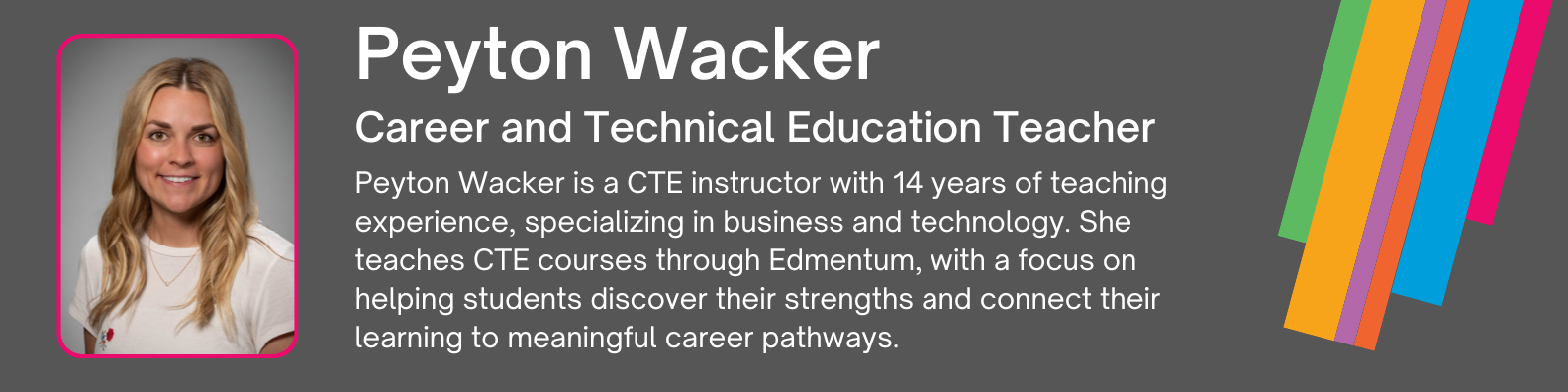
Peyton Wacker, now in her 14th year as a CTE teacher, spent eight years in a traditional classroom before transitioning to online instruction, giving her a front-row seat to the benefits of digital flexibility.
“I believe that meeting students where they are and making them feel valued creates the foundation for them to reach their fullest potential. Above all, I enjoy showing students how the skills they’re learning today can create opportunities for their future.”
She enjoys teaching CTE courses online because it empowers students to learn at their own pace while also gaining opportunities to earn state and national certifications in pathways that can prepare them for the future. Her students develop technical skills, such as resume writing and navigating the job search process, but also essential logic, problem-solving, and interpersonal skills that they’ll need in the workplace.
Determining What Realistically Fits Each Student’s Interests
Peyton believes that a valuable part of helping students prepare for the future is giving them the insight and room they need to figure out what they truly enjoy and what wouldn’t actually be a good fit.
“I like to call this ‘forward failing,’ because even if a course or experience shows a student what they don’t want to pursue, it helps them shift direction early, saving time and opening the door to new opportunities for their future.”
To keep students engaged, supported, and on the path to success in an online setting, she focuses on providing:
- High-quality, personalized feedback so students know what they’re doing well and where they can improve.
- One-on-one sessions to support students who need additional guidance and to make sure they feel confident with the material.
- Video demonstrations of tasks and activities, giving students a clear, step-by-step model they can revisit at their own pace.
The shift to online learning has expanded what’s possible for CTE, and educators like Julia and Peyton are leading the way, making virtual classrooms a lever for not just success in the workforce, but also a lifetime of adaptation and growth. We’re excited to see how this work opens doors that have long been closed for students around the world.
In an educational landscape that demands flexibility and choice, Edmentum equips your district with virtual learning that is scalable, human-centered, and pedagogically sound. Learn how our state-certified teachers can increase your offerings with CTE courses, plus core, AP® and more. Explore virtual learning with Edmentum.