A Project-Based Approach to Alternative Learning in Arkansas Schools

Location:
Arkansas (statewide)
About the Cooperative:
ESC supporting 28 school districts and 40+ alternative learning programs across Arkansas
Edmentum Solutions:
Courseware
How an Education Service Cooperative (ESC) aligned project-based learning and digital coursework through Edmentum Courseware to create consistent, mastery-based pathways for Arkansas students whose lives don’t quite fit traditional school structures.
Key Takeaways for Districts Providing Alternative Learning
- Shift the Focus from Seat Time to Demonstrated Mastery: Attendance rules often punish students for the exact challenges that brought them to alternative education. To create a vital graduation pathway that survives attendance gaps, allow students to earn credit by demonstrating mastery.
- Create a Uniform System of Operations: Autonomy at the individual classroom level can lead to uneven student experiences. Eliminate the risk of a student's success being determined by which building or classroom they enter by making sure everyone follows the same grading rules, uses the same core curriculum, and works toward the same academic goals.
- Use Digital Coursework as a Standards Anchor: Project-based learning (PBL) provides the engagement students need, but it can leave holes in state-mandated standards. If students are immersed in hands-on, transferable skills projects for most of the week, layer in digital coursework to ensure every standard is met.
- Build for Immediate Enrollment: Alternative programs must be "plug-and-play" because students often arrive mid-semester. To eliminate waiting periods and get students working on courses right away, optimize systems for rolling enrollment, using tools that can instantly generate a custom academic roadmap for a student on their first day.
- Focus Less on Finishing Tasks and More on Mastering Content: To prevent students from guessing their way through assessments, mandate active instructional checkpoints, and require students to complete guided notes or interactive tutorials before they attempt an exam. This leads to higher first-time pass rates and genuine academic growth.

The odds were stacked against the young mother who was trying to balance school, parenthood, and housing insecurity all at once. She had returned to her district high school and earned A’s in her classes, but attendance gaps prevented her from securing the credits she needed to graduate. In Arkansas, 10 unexcused absences mean no credit.
Having dropped out twice, she walked through the doors of Dawson Education Service Cooperative’s alternative learning program, determined to succeed this time—and she did.
“Through the classes supported by Edmentum Courseware, she was able to obtain her diploma,” said Dawson ESC Program Director Jeff Warden. “She was here for a semester and two weeks and was able to get everything done. Now, she’s a mom of two with a high school diploma.”
Helping Students Overcome Barriers Across the State
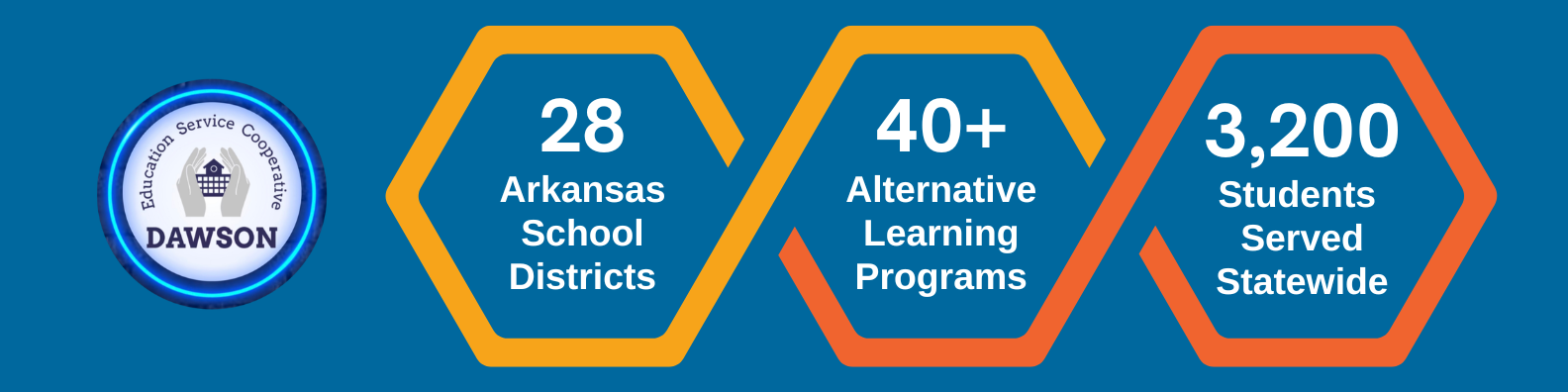
Dawson ESC operates on a remarkable scale and level of complexity, serving 28 school districts across Arkansas and working with more than 40 alternative learning programs spanning every corner of the state.
In Arkansas, students qualify for alternative learning when they possess at least 2 of 11 qualifying factors that are keeping them or others from being successful in the traditional classroom, Warden explained, adding that those factors include recurring absenteeism, frequent relocation, lack of proficiency, health challenges, and family responsibilities.
“These are students dealing with real barriers outside the classroom, whether that’s frequent relocation, proficiency gaps, health challenges, or family responsibilities, and those barriers make a traditional school day hard to navigate,” Warden said. “Our goal is to help them build the academic progress, coping skills, and confidence they need so they can be successful and ultimately transition back to their home schools.”
For years, the program allowed teachers to align instruction with the curriculum their home district was using. While that approach offered a level of autonomy, students with similar needs were having very different experiences, depending on where they were enrolled.
The cooperative recognized that uneven experiences for students would lead to inequitable outcomes. They needed to redesign their instructional model and reevaluate the digital platforms supporting it. Upgrading from Apex Learning to Courseware would deliver what Warden calls “a system of uniformity” to ensure that every student has the same learning experience, wherever they are.
Managing a Platform Implementation Without Disrupting Learning
A platform upgrade at this scale took planning, but Edmentum support staff were readily available to walk them through the process. Administrators were the first to become acclimated, and they helped staff get past the initial growing pains, which were notably short-lived once everyone was able to see how robust and user-friendly Courseware is.
“By the second semester, staff had received the training and support they needed, and that made the upgrade from Apex Learning to Courseware smooth and easy,” said Warden. “As their confidence with Courseware grew, they could see how much more they were able to do with it, and everybody was on board.”
Before long, educators could clearly see how the new platform supported their day-to-day work, which involved rolling enrollment and students entering courses at different points in the year.
“One of the things they really like is how easy it is to change the pacing when we get new students,” Warden said. “For example, when they enroll a student in a class, that calendar automatically pops up and they’re able to select the start date for that student.”
Where Project-Based Learning and Courseware Meet
Students in Dawson’s alternative learning program are immersed in hands-on projects three days a week, allowing them to freely explore and discuss everything they’re learning. Those projects build transferable skills and deeper understanding, but they don’t always align with every academic standard.
“If you’re in eleventh grade and you’re supposed to be taking Algebra II, the project may not hit on Algebra II concepts as well as it needs to,” Warden said, so Dawson intentionally pairs project-based learning with Courseware to ensure that each project meets state standards and subject-level requirements.
Moving from Repeated Retakes to Meaningful Learning
Students were spending significant time guessing their way through lessons and retaking assessments repeatedly until Courseware was introduced, and Warden likes how the system now focuses on mastery rather than completion.
“The guided notes and interactive lessons require students to engage more deeply up front, so students are spending roughly the same amount of time learning the material, but now they’re passing assessments on the first attempt and really mastering the material,” he said. “To me, that’s one of the strengths of Courseware. I love that students have to relearn before they retest.”
Courseware’s interactive tutorials have also improved the way struggling readers engage with content, making lessons more engaging for them. At the same time, the platform requires strong instructional follow-through, with teachers actively monitoring student work and checking their tutorials.
What Makes Dawson ESC’s Model Consistent and Scalable
With more than 1,200 Courseware licenses in use and project-based learning taking place throughout the state, how does Dawson ESC deliver equitable experiences to all sites while still honoring individual student needs? The answer is uniformity.
“They’re all set up exactly the same,” said Warden. “The same classes are available, they’re working toward the same academic goals, they all follow the same rules for passing grades and attempts, and we can get each student there in a way that works for them.”