Tutoring & Intervention Toolkit
High-impact tutoring works, but only when it's built on evidence, not good intentions. Every year, schools invest in tutoring programs that have shown little to no measurable impact on student learning. The difference between spotting programs that move the needle and those that don't comes down to one thing: whether they're validated in research.
This toolkit breaks down what actually makes tutoring "high-impact," why it fits so naturally into individualized intervention models like MTSS, and what to look for if you're building or buying a program. It also includes our best learning and planning resources to ensure your tutoring program achieves maximum impact.

High-Impact Strategies for Provable Results
Not all tutoring produces the same results. The term "high-impact tutoring" (sometimes called "high-dosage tutoring") refers to a specific set of design features that researchers have linked to research-validated gains:
Small groups
No more than 4 students per tutor, ideally 1:1 or 1:2
Frequent sessions
At least 3 days a week, often defined as 50+ hours over a school year
Consistent tutor-student pairing
The same tutor works with the same student over time, adjusting instruction based on ongoing assessment, so the relationship builds
Curriculum alignment
Sessions connect to what's happening in the core classroom, not a generic worksheet packet
Align with tutoring best practices using these tools:



The Research, in Plain Terms
A few findings show up consistently across studies, and they're worth knowing before you evaluate any program:
Learning gains
A meta-analysis of randomized controlled trials found tutoring increased achievement by roughly 3 to 15 months of learning across grade levels, with well-implemented programs on the higher end of that range (EdResearch for Action).
Read the ResearchDesign features protect results at scale
A 2024 meta-analysis of 265 randomized controlled trials found that pooled effect sizes shrink as programs grow, from about 0.44 standard deviations in programs under 100 students down to 0.16 in programs of 1,000 or more. Programs that kept the core design features, small groups, frequent sessions, and consistent tutors, held onto significantly more of their impact as they scaled (EdWorkingPapers).
See the ResearchAttendance gains
A 2025 Stanford study of Washington, D.C.'s High-Impact Tutoring Initiative found students were about 7% less likely to be absent on days they had a scheduled tutoring session, with even larger effects for middle schoolers and chronically absent students (National Student Support Accelerator).
Read the ReportExplore the possibilities with these tools:



What did we find?
We compared the end-of-year reading achievement of over 2,000 upper elementary students from a large school district in New Jersey who began the year performing below grade-level. These students were practically identical at the beginning of the year, but one group received Targeted Skills Instruction, Edmentum’s virtual small-group tutoring.
Design Principles to Look For
Whether you're building a program in-house or evaluating outside providers, use this checklist to separate high-impact tutoring from tutoring in name only:
Organization
Sessions run at least 3 times a week, in groups of 4 or fewer
Qualified Educators
Educators have real training and ongoing coaching, not a one-time onboarding
Content
Tutoring content connects to what students are learning in core instruction
Diagnostics
A valid, reliable diagnostic assessment identifies each student's specific gaps before grouping begins
Progress Monitoring
Progress is monitored continuously, with data feeding back into what happens in the next session
Consistency
The same tutor works with the same student consistently, so trust and rapport can build
In-depth Reporting
Program leaders can report on academic, attendance, and engagement outcomes, not just usage
MLL Support
Including translations for captions and live instruction
Accomplish the design principles with these tools:

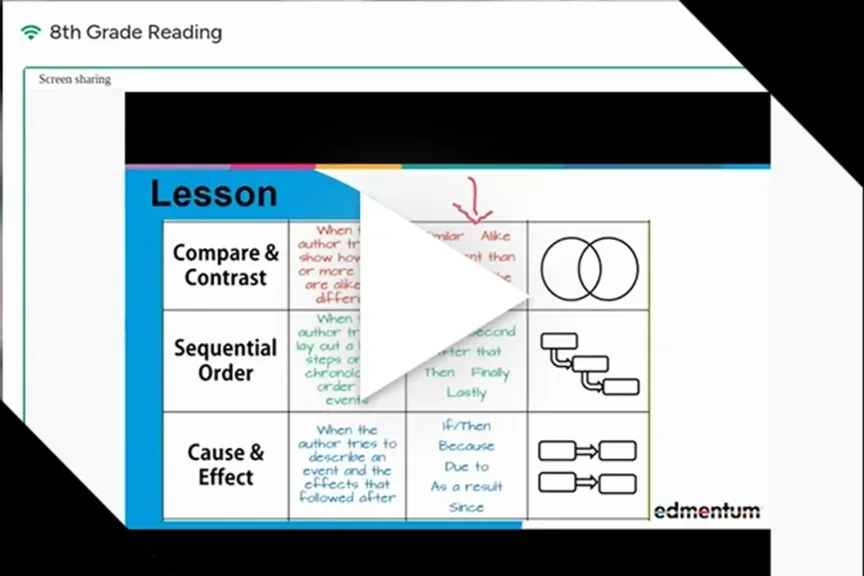
"What makes [this] different from the programs I’ve used is that you’re not talking to some kind of robot. You’re talking to an actual person."
Why It Works So Well for Individualized Intervention
Most schools already run some version of a Multi-Tiered System of Supports (MTSS), matching the intensity of support to the size of a student's gap. High-impact tutoring fits naturally into that structure because it's built to flex.
Tier 2 and 3 foundational support
For students missing basic skills, small-group, high-frequency tutoring rebuilds the fundamentals needed to access grade-level content.
Tier 1 acceleration
For students who are close to proficient, tutoring provides the final push needed to hit a state assessment or end-of-course exam benchmark.
Built-in flexibility
Because sessions run on real-time data instead of a fixed script, the same tutoring model can serve a third grader rebuilding phonics skills and a tenth grader closing an algebra gap, sizing support to the student rather than the program.
Part of a connected system
Tutoring delivers the strongest results when it's paired with reliable diagnostic assessment up front and clear progress monitoring throughout, turning individual sessions into measurable academic outcomes rather than a standalone add-on.
Revitalize your intervention strategy with these tools:


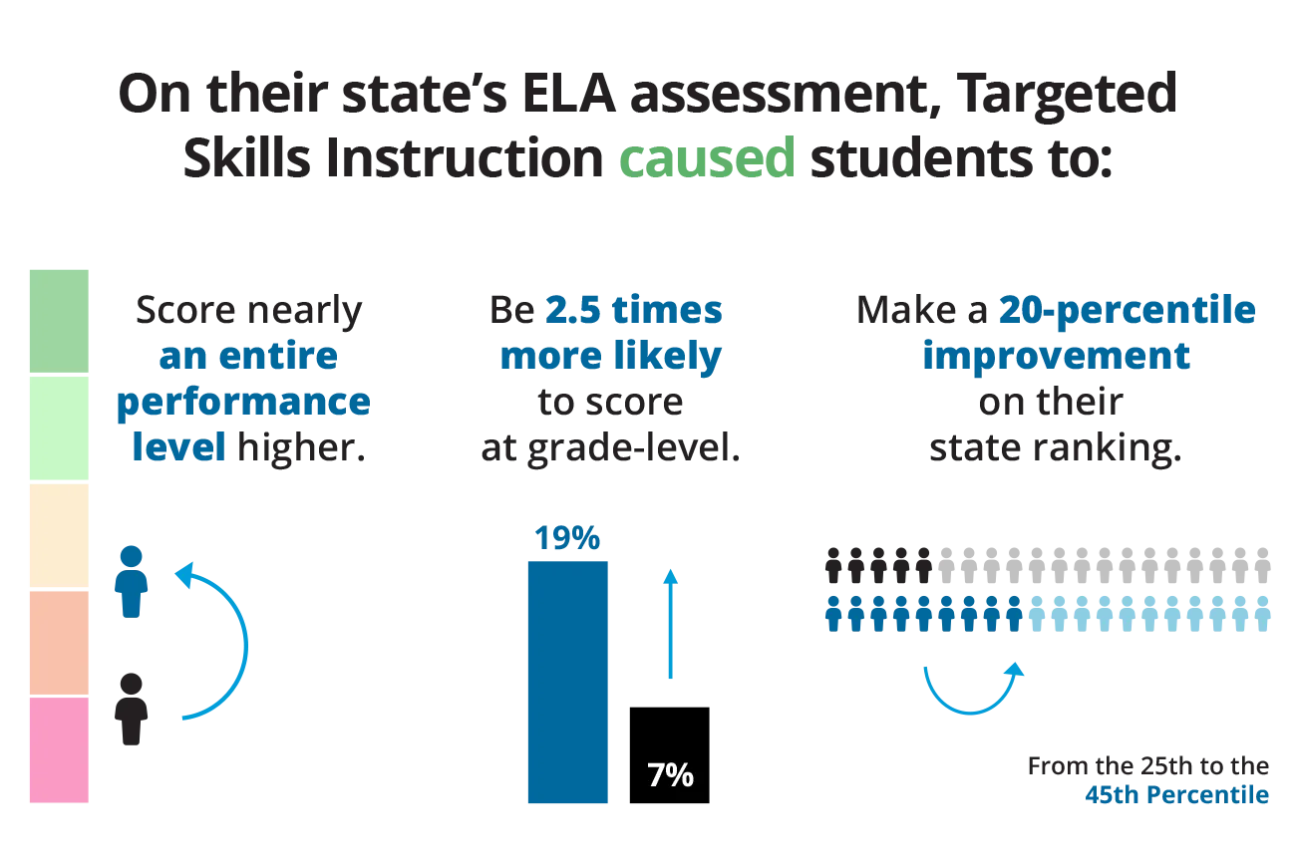
Targeted Skills Instruction Substantially Improves Reading Achievement
Causal research shows struggling students improved their academic trajectory on state assessments because of Targeted Skills Instruction
Check out some of our other Toolkits


Improve literacy outcomes with Edmentum’s Science of Reading Toolkit. Practical guidance, funding strategies, and tools to help every student become a strong reader.

Support effective test preparation with Edmentum’s Test Prep Toolkit—expert guidance and practical resources for schools and districts.

Edmentum’s Summer Toolkit helps districts design effective summer learning with practical tools, best practices, and strategies to accelerate achievement.