
Science of Reading Toolkit
The Science of Reading movement champions teaching methods grounded in how the brain actually learns to read. Its goal is simple: give every child—struggling or not—clear, systematic instruction in the skills that make strong readers, from cracking the code of phonics to building rich vocabulary and comprehension.
Literacy in the 21st Century
Literacy education in the 21st century is rapidly evolving, blending digital learning with evidence‑based approaches from the Science of Reading. By combining explicit, research‑driven instruction with technology‑rich experiences, educators are helping students build strong decoding skills, deepen comprehension, and navigate an increasingly complex digital world. (Source: NCES)
69% of 4th graders cannot read proficiently
54% of US adults read below a 6th-grade level
Low literacy costs the US $2.2 trillion per year
Use these tools to assess the state of your literacy efforts.
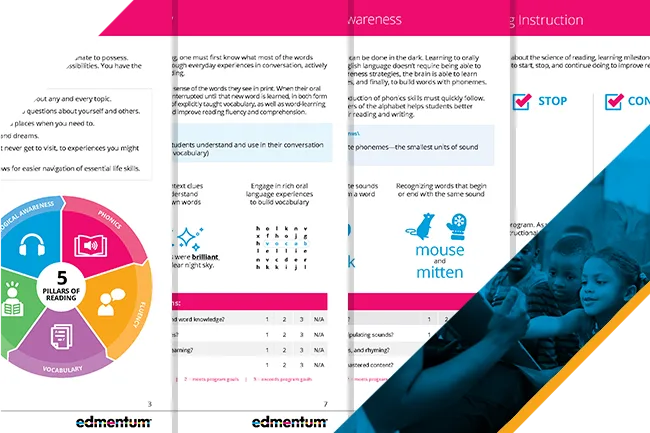
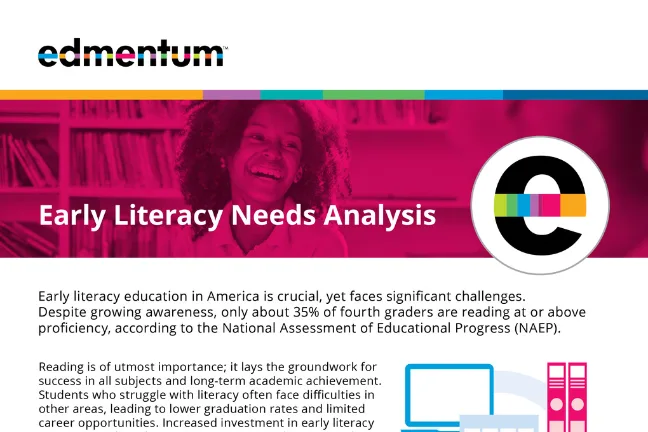
Tools to further the Science of Reading
What is the Science of Reading?
The Science of Reading isn’t a program, a buzzword, or the latest trend. It’s a rich, decades‑deep body of research that reveals how the human brain actually learns to read. Drawing from cognitive psychology, neuroscience, and linguistics, it replaces guesswork with proven instructional practices, helping educators teach reading in ways that are grounded in evidence, not intuition.
It’s a literacy revolution powered by science, not guesswork.
The Science of Reading blends five decades of cognitive psychology, neuroscience, and linguistics to finally explain how the brain learns to read—cutting through fads and giving teachers evidence they can trust.
It flips the old “kids will pick it up” myth on its head.
Reading isn’t natural; it must be explicitly and systematically taught. SoR’s research-backed focus on phonemic awareness, phonics, fluency, vocabulary, and comprehension makes instruction clearer, stronger, and more equitable.
It reframes reading instruction as a science, not a style.
Instead of being a program or philosophy, the Science of Reading is a deep body of “gold‑standard” research showing how decoding, language, and comprehension develop—finally giving educators a map rather than a menu.
Explore how Exact Path works with the Science of Reading's 5 Pillars in our series:
- Five Pillars of Reading: Key Elements for Literacy Success article
- Exact Path and the Science of Reading: Phonics video
- Exact Path and the Science of Reading: Comprehension video
- Exact Path and the Science of Reading: Vocabulary video
- Exact Path and the Science of Reading: Fluency video
- Exact Path and the Science of Reading: Phonological Awareness video
How Schools Can Strengthen Literacy Through Smarter Funding
School districts are getting bold and inventive in the hunt for literacy funding—mixing grants, community partnerships, and creative local campaigns to fuel reading success. From tapping federal programs to teaming up with businesses and nonprofits, they’re piecing together diverse funding streams that bring in new books, better tools, and stronger support for both students and teachers. The result? More momentum, more readers, and literacy initiatives that can truly last.
Audit Current Budgets
Identify where existing funds already align with reading initiatives and where gaps remain.
Tie Literacy to Improvement Plans
Connect test‑readiness efforts to school and district improvement goals to strengthen funding justification.
Pursue Competitive Grants
Look for grants focused on academic recovery, tutoring, or targeted intervention.
Combine Multiple Funding Streams
Work with district leaders to braid interventions, support programs, and federal/state resources into a unified strategy.




We saw our students’ scores increase [with Exact Path], and it’s not only about the scores. Students’ confidence in the content, math and reading, also increased. It really makes all the difference when you have someone that’s listening to your needs.
Getting Started with the Science of Reading
Schools and districts can jump-start their Science of Reading journey by building a shared understanding of how the brain learns to read and why evidence-based instruction matters. The best first steps include auditing current literacy practices, equipping educators with high-quality professional learning, and adopting materials grounded in phonics, vocabulary, and comprehension research.
Literacy Audit
Review instructional materials, observe classroom instruction, analyze student data, and comparing all findings against evidence‑based Science of Reading principles to identify strengths and gaps.
Professional Development
Offer hands‑on workshops, real‑classroom coaching cycles, and collaborative practice sessions that help educators confidently use evidence‑based strategies from day one.
Material Adoption
Select curricula and intervention resources that are explicitly systematic, backed by rigorous research, and designed to strengthen foundational skills like phonemic awareness, phonics, fluency, vocabulary, and comprehension.



How can Edmentum help?

Exact Path Growth
Within Exact Path, Growth offers personalized, adaptive learning paths to close skill gaps and propel outsized gains in K–12 math, reading, and language arts.
Assessments & Intervention
Exact Path Proficiency
Within Exact Path, Proficiency delivers standards-aligned formative assessments and practice in math, ELA, science, and social studies for grades 3-12 to drive core subject standards mastery and test readiness.
Assessments & Intervention

Targeted Skills Instruction
Our intensive, K–12 virtual tutoring closes learning gaps and propels academic growth with program flexibility to target and support unique student needs.
Instructional Services