Purpose Took Priority in Edtech Conversations at ISTE + ASCD 2026
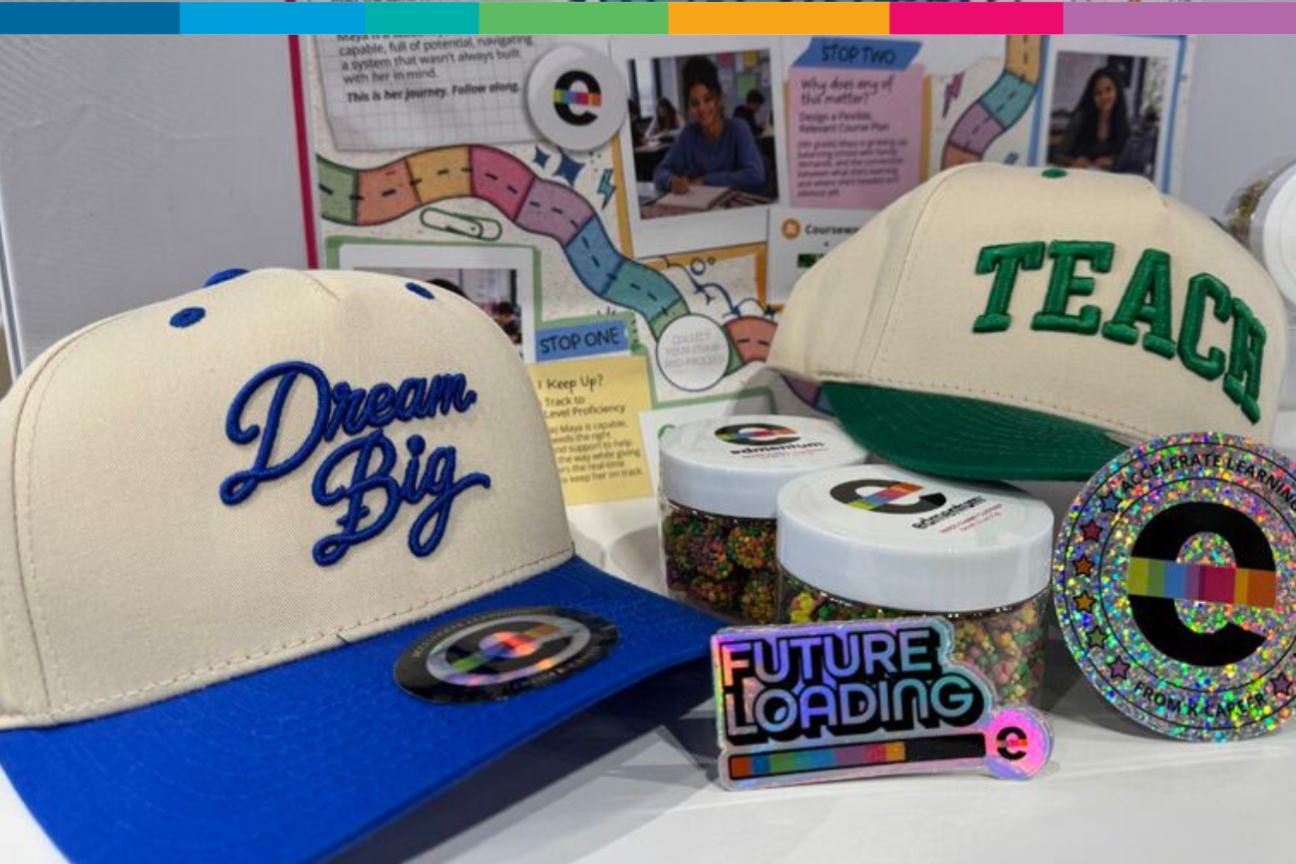
More than 12,000 educators gathered at the ISTELive + ASCD Annual 2026 conference to see what’s new in edtech. Beyond the product demonstrations, AI conversations, and new approaches to career readiness, another question kept surfacing: How can schools make sure their technology is actually helping students learn?
The edtech conversation has certainly matured, and we enjoyed every minute of digging into those discussions as we took attendees through the Road to Readiness journey and listening to school and district leaders. In a TeacherCast interview on the conference floor, Edmentum CEO Jamie Candee said the conference gave educators a rare opportunity to step back from their daily work and think through those priorities together.
- Choosing edtech backed by credible evidence
- Making learning more relevant to students’ lives
- Pairing flexible learning with meaningful human support
Choosing Truly Effective Edtech Tools
Richard Culatta, CEO of ISTE + ASCD, opened the conference by introducing the Safe & Purposeful EdTech Pledge, advising school leaders to look beyond broad promises about innovation and choose tools that have been evaluated by trusted third parties.
We agree, and we enjoyed talking to conference attendees about Exact Path—backed by 15 ESSA-rated studies—and EdOptions Academy, each of which has earned the ISTE Seal. Edmentum Courseware is also #1 in Quality Matters, ISTE, and NCAA approvals.

But technology doesn’t improve learning simply because it’s available. Even solutions that meet those high standards need to be introduced and implemented with purpose and consistent support, which is why Edmentum starts by asking districts what they need the technology to accomplish.
“What’s important? What are the outcomes you're trying to drive?” In the TeacherCast conversation, Candee proposed these as the foundational questions. “We build an implementation plan, and our customer success managers ensure that that implementation plan is executed.”
That process is led by people who understand the realities of schools. All of Edmentum’s customer success managers and professional learning specialists are former educators or administrators. “The individuals who are doing implementation in your schools, they have walked in your shoes,” Candee said.
Culatta extended that responsibility beyond the classroom, saying that families also need to understand the purpose and value of edtech use. “Parents need to learn that using technology for learning is important and what it looks like when it’s done well,” he explained.
Adopting a Broader Definition of AI Readiness
AI was a hot topic, of course, but the focus was less on tools themselves and more on how to help students use those tools responsibly. In the Portrait of an AI-Ready Graduate Pavilion, educators explored six roles that students may inhabit as they learn with technology: Learner, Researcher, Synthesizer, Problem Solver, Connector, and Storyteller.
Dr. Tony Frontier, author of AI with Intention, dug into that in a session on student agency in the age of AI and during a podcast interview recorded at the Edmentum booth. AI use can support deeper engagement, but it can also undermine learning. Well-defined intention is what can support the former and prevent the latter.
Connecting Classroom Learning to College and Career Readiness
“How do we make sure that core academics are relevant and engaging for students?” Candee asked. That question resonated throughout the event, with educators discussing ways to help students make meaningful connections between their academic work and their future plans.
“One of the number one goals we have at Edmentum is to bring real-world relevance to students,” Candee stated, highlighting Edmentum’s partnership with Roadtrip Nation, which brings authentic career stories into core curriculum and career learning courses.
She offered an example of how world champion surfers use geometry. The point of career-connected learning isn’t to infuse surfing into an academic lesson, but to show students how the concepts they’re learning at school will eventually help them achieve their goals, even if the two seem unrelated today.
Sessions presented during the conference also focused on this theme. A presentation on Winchester, Virginia’s high school redesign examined what changes when student purpose moves closer to the center of the high school experience, and sessions on virtual CTE explored how schools can make career-connected learning more inclusive.
Candee also asked a broader question: “How do we really fulfill the promise of career readiness in K-12?”
One critical factor, as she explained in a conversation with the EduTech Guys, is that giving students a passion for career exploration in middle school, and even upper elementary, is one of the most important things we can do. Career readiness is a progression that can begin with planning and exploration in middle school and develop into deeper learning in high school. Edmentum supports that process with more than 180 CTE semesters aligned to 57 multi-year pathways and works with employers across the country to bring valuable experiences to high school students.
Candee emphasized that schools don't have to choose between preparing students for college or careers. “We can help kids be college-ready, which we've been saying for decades, and also career-ready. And we think that both are very important,” she said.
Delivering Virtual Learning With Human Support
Virtual learning can expand the options available to students, but technology alone doesn’t create engagement. Educators still need ways to keep students connected to their learning and their school communities. The more flexible or tech-enabled a learning environment becomes, the more intentional schools need to be about maintaining communication and relationships.
Michele Guyer, ISTE author and principal of Warren Online Academy in Indiana, shared some strategies for improving attendance and engagement among virtual school students, centering on proactive outreach and personalized support.
From Edtech Adoption to Purposeful Implementation
A key overall takeaway from ISTE + ASCD is that the selection of edtech takes a great deal of judgment. A school should be able to explain not only what a tool does, but why they’re using it and what outcomes they expect to see. In turn, school leaders need to determine whether a tool addresses a clearly defined student or instructional need; is supported by credible, independent validation; includes the implementation and professional learning needed to use it well; and gives all stakeholders, including families, a clear understanding of its purpose.
“We start by listening and making sure that we have shared goals with each of our school districts and our schools,” Candee said, and that underscores what Edmentum brings to the edtech space: Partnerships that help districts strengthen core instruction, expand flexible learning, and create clear pathways into students’ postsecondary pursuits.