
The Science of Reading Explained: Phonics

In The Science of Reading Explained, we unpack the research behind one of education’s most essential priorities: building strong foundational literacy skills. As schools work to improve reading outcomes and provide more effective support for every learner, states and districts are placing greater emphasis on evidence-based instruction grounded in the science of reading.
What Phonics Instruction Is and Why It Drives Reading Gains
Phonics instruction teaches students the correlating sounds with letters or groups of letters in an alphabetic writing system. The science of reading research tells us that phonics instruction is necessary for all students and that effective phonics instruction should be systematic.
With Exact Path, Edmentum’s K–12 diagnostic-driven, individualized learning program, phonics instruction is woven in throughout the program in a systematic, research-based way that follows the science of reading best practices. Going a step further, phonics instruction is an umbrella for four different skills: print awareness, sight words, alphabetics and decoding, and word analysis. Let’s take a closer look at each of these skills to learn why they are important for building successful readers and how Exact Path addresses each of these skills.
Six Key Aspects of Print Awareness
Print awareness is the earliest introduction to a child’s literacy. When learning print awareness, students master six key aspects about print and books:
- Print carries meaning
- Books contain words and have meaning
- Books are structured with words forming sentences and paragraphs
- Books are handled in specific ways, such as top to bottom and left to right
- Each part of a book can be easily identified
- Authors write books, whereas illustrators make the images and pictures
Students are exposed to print awareness long before they enter school. Not only is it modeled at home and school during read-alouds, but they see print all around them—on signs and billboards, in alphabet books and story books, and on labels.
Students will see print awareness modeled and practiced in Exact Path through character interaction and discussion on how to read a book and descriptions on essential book parts.
Sight Words in the Science of Reading
Sight words are the words that appear most frequently in our reading and writing, and often, these words do not have a concrete image that matches them. Learning sight words, also known as high-frequency words, is an important part of phonics instruction. Not only do students learn the words that make up 50–80 percent of our reading, but they also see that not all words follow phonetic rules.
To support students’ sight word skills, Exact Path’s engaging characters introduce a word explicitly and integrate it in practice, encouraging students to authentically read sight words in context.
Helping Student Master Alphabetics and Decoding Skills
The skill of alphabetics and decoding makes up a significant portion of phonics instruction, and this ability is taught over multiple grade levels. Mastering alphabetics allows students to connect spoken sounds to letters. Decoding is the ability to apply one’s knowledge of letter-sound relationships, including knowledge of letter patterns, to correctly pronounce written words. When working on this skill, students will also learn how letters work together to create sounds and how syllable patterns can be used to decode words. Research shows that early skills in alphabetics serve as strong predictors of reading success, while later deficits in decoding is the main source of reading difficulties—making this skill an especially important part of phonics.
When it comes to alphabetics and decoding, Exact Path uses a systematic progression throughout its foundational reading content in the elementary grades. For your youngest learners, Exact Path introduces each letter and coordinating sound. This foundation is then used to successfully introduce word blends and other letter combinations to build new words followed by multisyllabic and academic words.
Word Analysis in Phonics Instruction
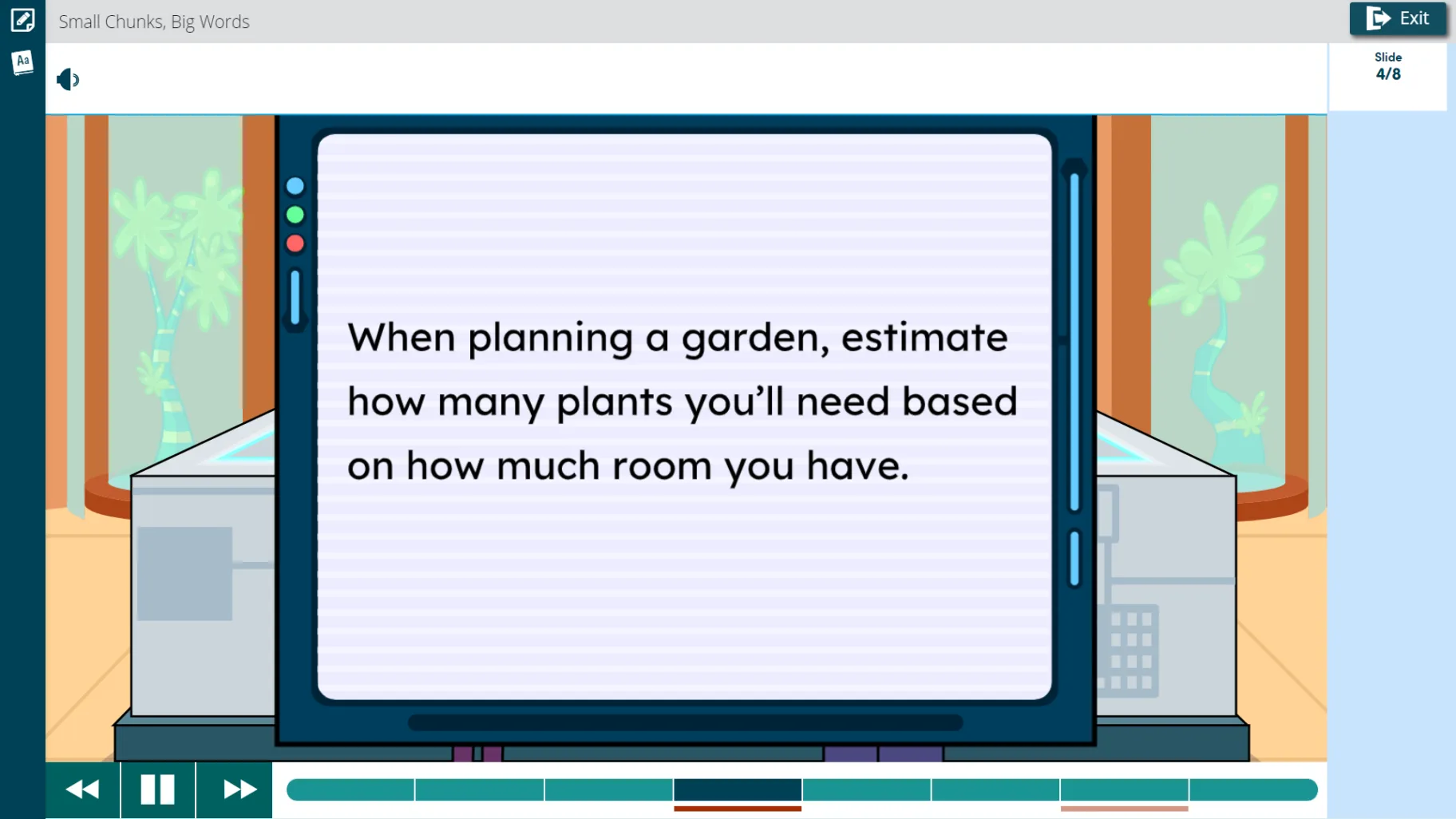
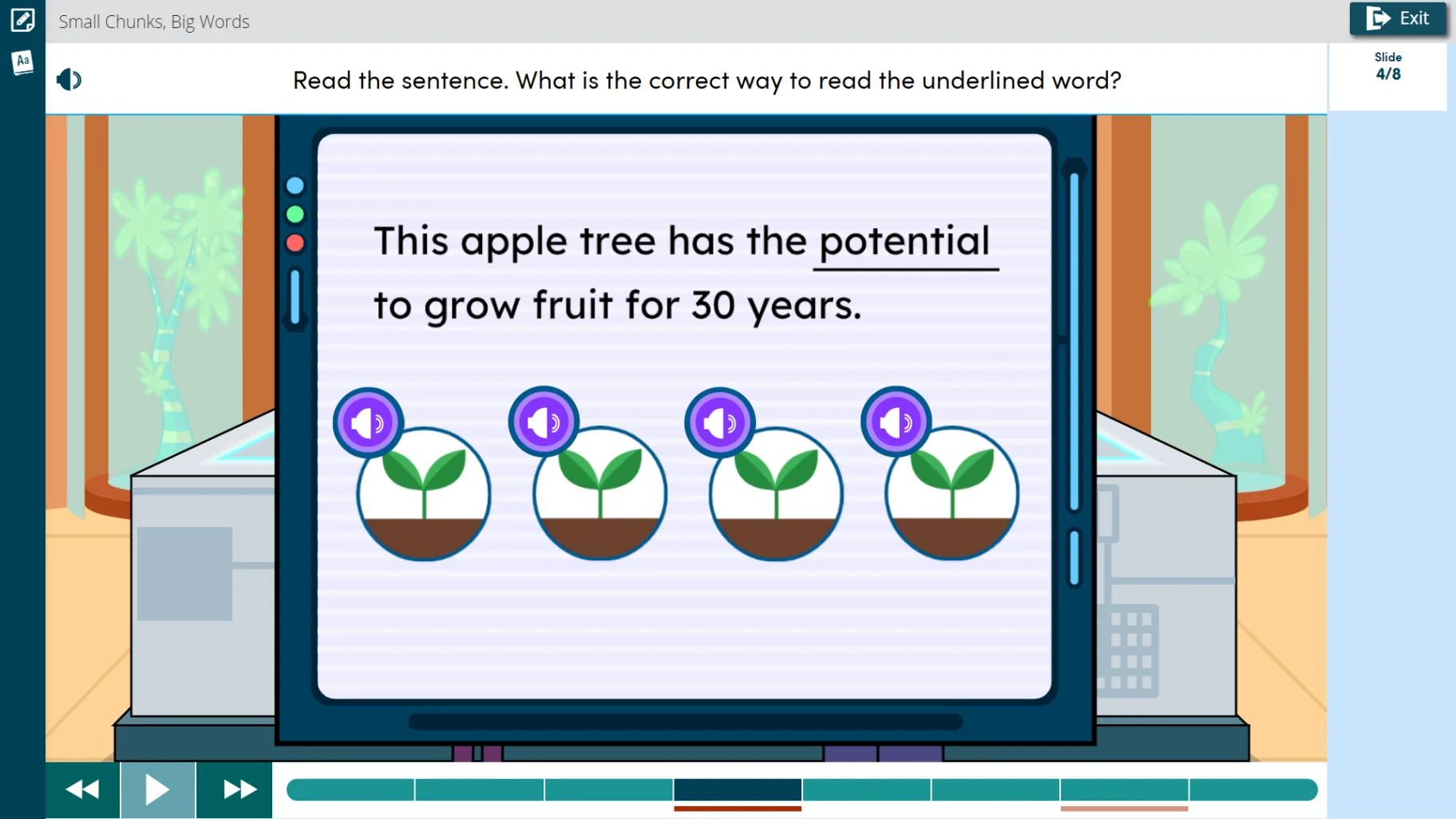
The final skill set under the umbrella of phonics is word analysis, which helps students approach longer or unfamiliar words by breaking them into smaller, more manageable parts. As students learn to recognize syllables and meaningful word parts, they can apply those patterns to decode increasingly complex words.
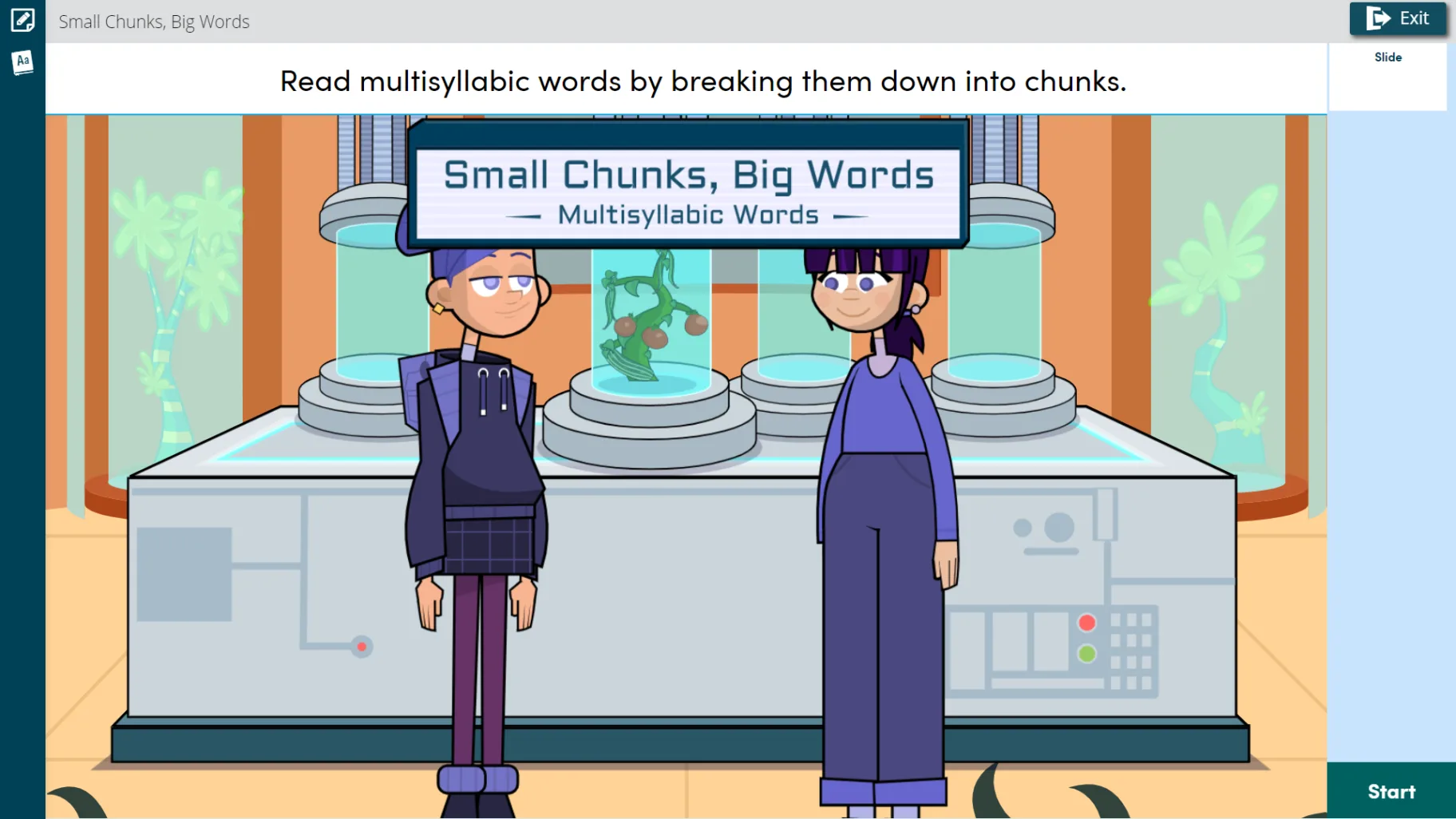
In this grade 3 Exact Path lesson, students learn how to divide multisyllabic words into smaller chunks, hear how each part is pronounced, and then apply the strategy independently.
Extend learning with this Phonics Matching Game, challenging students to match consonants with the most common phonograms to form words. This engaging activity reinforces the understanding of sound-symbol correspondence and strengthens word decoding skills.
How Exact Path Supports Phonics Instruction
Exact Path provides diagnostic-driven personalized literacy instruction, grounded in the science of reading, to help students build the foundational skills and knowledge they need to become stronger readers. Throughout exploration of each essential phonics skill, students will encounter a developmentally appropriate approach to learning with engaging, friendly characters and explicit, systematic instruction. Students learn to make connections between letters and sounds so they can decode unfamiliar words with greater confidence.
- Explore: See how Exact Path accelerates student achievement
- Watch: Science of Reading webinar with Reading Is Fundamental
- Read more from this series: The Science of Reading Explained