
What Successful School Improvement Can Teach Us About Test Readiness

Two students earn identical scores on a math assessment. One is struggling with fractions, the other with integers. On paper, they're performing at the same level, but in the classroom, of course, they need very different support.
Being able to make that distinction is central to successful school improvement, especially as schools prepare for state testing. While it may be easy to see who’s performing below proficiency, meaningful progress requires a deeper understanding of what's holding students back and addressing the gaps before the year is over.
In the edWeb panel discussion, School Improvement: From Plans to Performance Across K–12 Districts, and the Edmentum webinar, School Improvement in Action: Data-Driven Intervention That Drives Measurable Gains, school and district leaders joined policy experts to examine the decisions behind successful improvement, including firsthand experiences from schools identified for improvement. Here’s what they advised.
1) Identify the Specific Skill Gaps Behind Low Scores
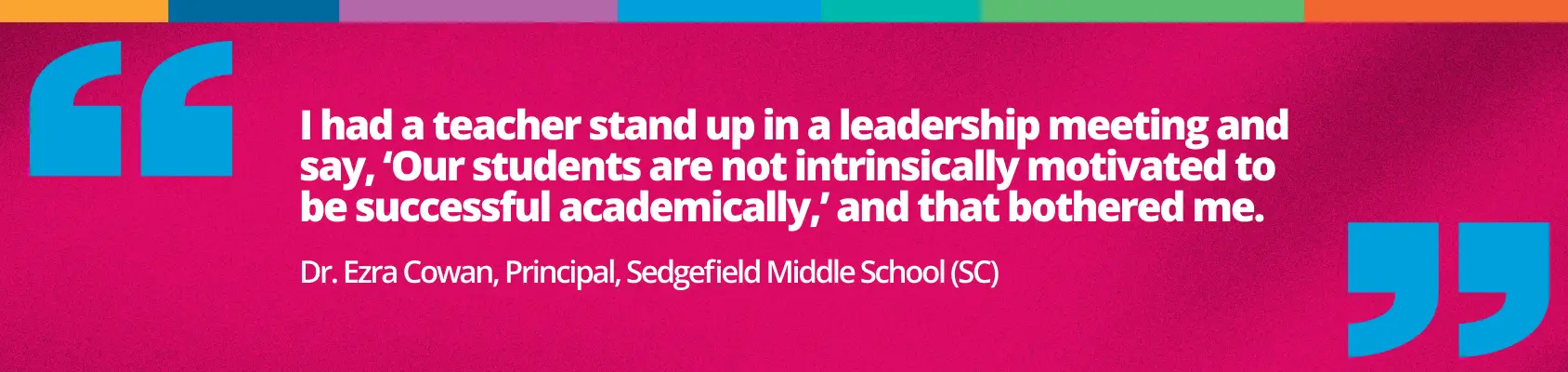
Dr. Ezra Cowan, principal of Sedgefield Middle School in South Carolina, presented a challenge to teachers in their professional learning communities (PLCs). The school had been identified for Targeted Support and Improvement (TSI), and Cowan wanted teachers to look beyond overall assessment scores and pinpoint where students were struggling, so they could use those findings to inform the following week's lesson plans.
That approach also shaped how the school identified students needing additional support. Using results from DRC Beacon assessments, the team was able to connect students performing near South Carolina's proficiency benchmark with targeted small-group tutoring, and the diagnostic information helped them determine which skills each group needed to address. Throughout this process, educators became better able to spend intervention time on precisely what each student needed to master.
The importance of reliable assessment data is also highlighted in Edmentum's 2025–26 Annual Impact Report, which documents Exact Path Insights' ability to predict performance on 28 state assessments, helping educators identify students needing intervention ahead of state testing.
2) Prioritize the Interventions That Will Improve Proficiency
Cowan narrowed Sedgefield Middle School’s improvement efforts to two or three priorities that the school could realistically tackle, reasoning that "You can't boil the ocean." Concentrating on just a few high-impact needs allowed his team to devote more attention to delivering interventions effectively.
Will Krebs, Edmentum's vice president of government relations, shared similar advice, recounting how he’s seen schools invest in numerous initiatives to improve reading, and how the school’s resources and educators' time ended up getting spread too thinly. Like Cowan, he recommends:
- Starting by diagnosing the academic gaps
- Selecting a manageable number of strategies
- Establishing how effectiveness will be measured
Hillary Rinaldi, vice president at Whiteboard Advisors, emphasized the importance of aligning interventions with classroom instruction. Students receiving additional support should be working on the skills they need to access grade-level content, rather than following an intervention plan disconnected from what they're learning in class.
Taking this approach also gives districts a stronger basis for funding decisions, directing available resources toward clearly identified instructional needs instead of adding programs that may be difficult to implement or sustain.
3) Use Assessment Data to Guide Instructional Decisions
When Dr. Tammy Taylor became principal of Great Falls Elementary School (GFE) in South Carolina, she faced a daunting improvement challenge. The school was ranked at the bottom of the state's Comprehensive Support and Improvement (CSI) list, and its instructional systems needed substantial rebuilding.
One consequential change that she made stemmed from realizing that presenting assessment results to teachers in data meetings wasn’t informing how they would teach. That "data admiration," as she called it, wasn’t shifting responsibility for analyzing and responding to the data to teachers.
"What instructional decisions will this information cause us to make?" she asked, and teachers became more skilled at identifying where learning was breaking down and what interventions would make a difference. Sometimes students needed a concept retaught differently. Sometimes they needed additional practice or a different instructional group. Students who had already demonstrated mastery needed opportunities to advance.
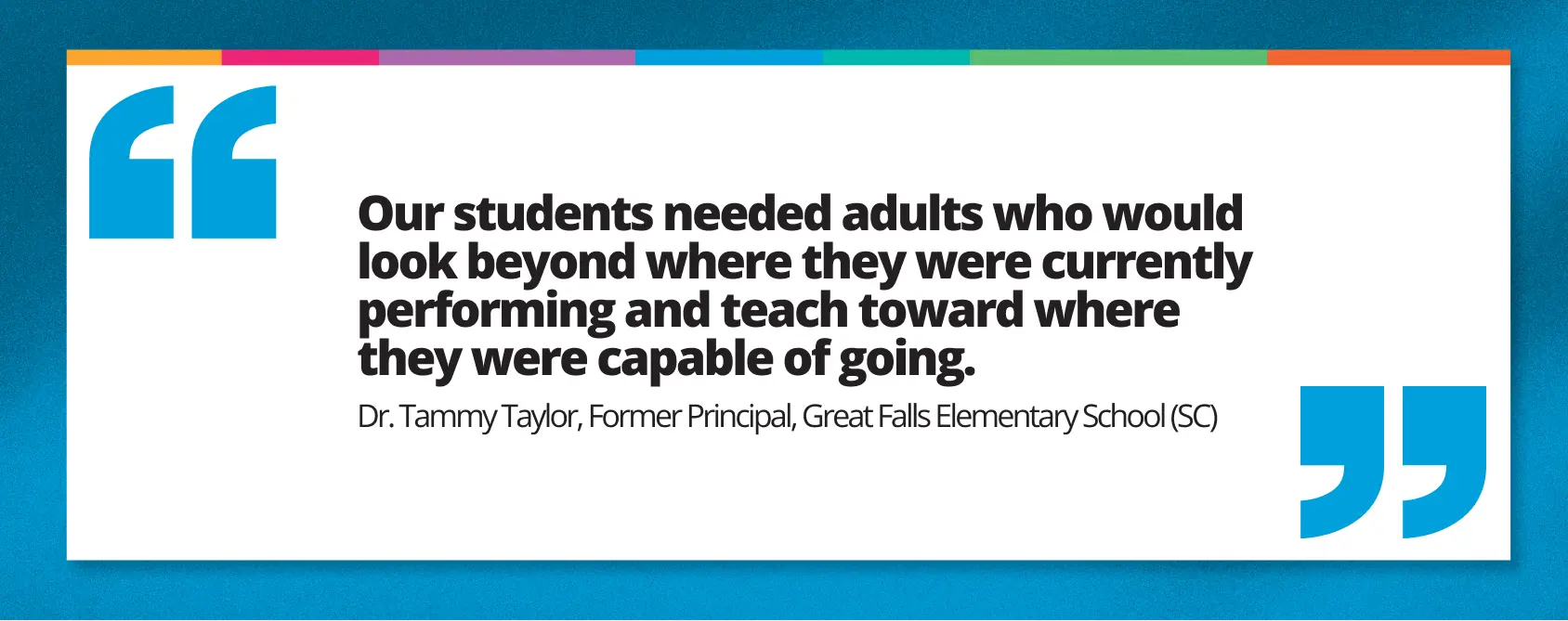
Taylor worked to replace disconnected practices with a more consistent approach to identifying and addressing student needs, using Edmentum’s Exact Path to provide individualized learning that targeted students' skill gaps. Within a single year, GFE improved its South Carolina report card rating from Unsatisfactory to Good.
4) Use Targeted Tutoring to Build State Test Readiness
At Sedgefield, Cowan used DRC Beacon assessment results to identify students for a six-week high-impact tutoring program using Edmentum's Targeted Skills Instruction. Students were grouped according to their specific learning needs, and a midpoint review allowed educators to assess progress and adjust participation, bringing in other students who needed additional instruction.
As South Carolina's SC READY assessments approached, Cowan built on that work with a four-week initiative called Shark Tutoring. Using Exact Path, the school reinforced targeted math and literacy skills. Teachers also helped students use their assessment results to set academic goals, giving them a clearer understanding of their own progress. Within Cowan's first year as principal, Sedgefield moved from below average to average.
The value of targeted tutoring is also supported by Edmentum research on academic acceleration, including an ESSA Tier 1 study showing that students receiving Targeted Skills Instruction were 2.5 times more likely to meet grade-level reading expectations than students who didn't receive the tutoring.
5) Measure Student Learning and Not Just Program Usage
At Manning Junior High School in South Carolina, which had been identified for Additional Targeted Support and Improvement (ATSI), students were spending the required amount of time in Exact Path, but that wasn't necessarily translating into successful learning. Jill Owens, instructional technology coach for Clarendon County School District, explained that the district needed a better way to measure progress.
The district shifted its emphasis toward demonstrated skill mastery, setting expectations for students to complete two skills per week with an 80% success rate. This gave educators a clearer picture of whether students were making progress and where they might need additional instruction.
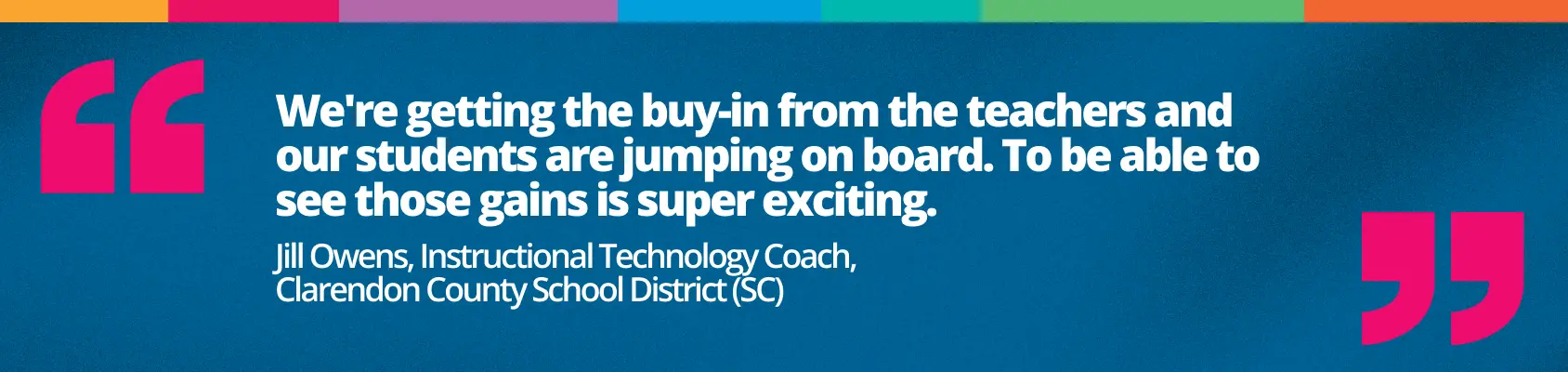
Clarendon County also used LearnPlatform to conduct a rapid-cycle evaluation comparing Exact Path usage with state assessment performance. At Manning Junior High, the analysis revealed a strong correlation between the two—evidence that the district's investment was associated with stronger academic performance.
The relationship between skill completion and achievement is also reflected research cited in Edmentum’s Annual Impact Report, including a Texas study that found a positive association between completed Exact Path skills and state reading assessment scores.
6) Build Test Readiness Into School Improvement Plans
State assessment results are important measures of academic performance, but unfortunately, they tend to arrive after most instructional decisions for the year have already been made. Throughout both discussions, panelists stressed the importance of establishing systems that can guide those decisions and support test readiness throughout the school year.
- At GFE, Taylor created instructional routines that could continue after her departure.
- At Sedgefield, Cowan integrated assessment analysis into teachers' ongoing planning.
- Clarendon County uses evaluation findings to determine where intervention working and where adjustments are needed.
Teacher involvement is central to all of this work, and educators need opportunities to deepen their understanding of the evidence, participate in instructional planning, and see how the work is impacting student progress.
State assessments reveal how far a school has come, but the school improvement work needs to happen all year long. By using assessment data to guide instruction and measure progress, schools can help more students reach proficiency while building on growth that lasts far beyond a single testing season.
To see how Edmentum is helping schools identify learning gaps, target instruction, and prepare students for state assessments, explore our test readiness solutions.